Tokenized Real Estate: A Beginner's Guide to Fractional Property Investment
A journey of a thousand miles begins with a single step. Tokenized real estate is exactly that single step towards your dream of investing in a premium property. Built on blockchain technology, tokenized real estate gives everyone, including those with limited capital, a seat at the table once reserved for the ultra-wealthy. A large property is divided into smaller blocks, making it affordable for everyone.
Being the “young India” working in India's growing economy, you've likely felt the frustration. That premium apartment in Bangalore starts with ₹1.2 crores. The commercial space in Mumbai? ₹2.5 crores minimum. Your salary is solid, your savings are growing, but the math doesn't add up for traditional property investment. Not yet, anyway.
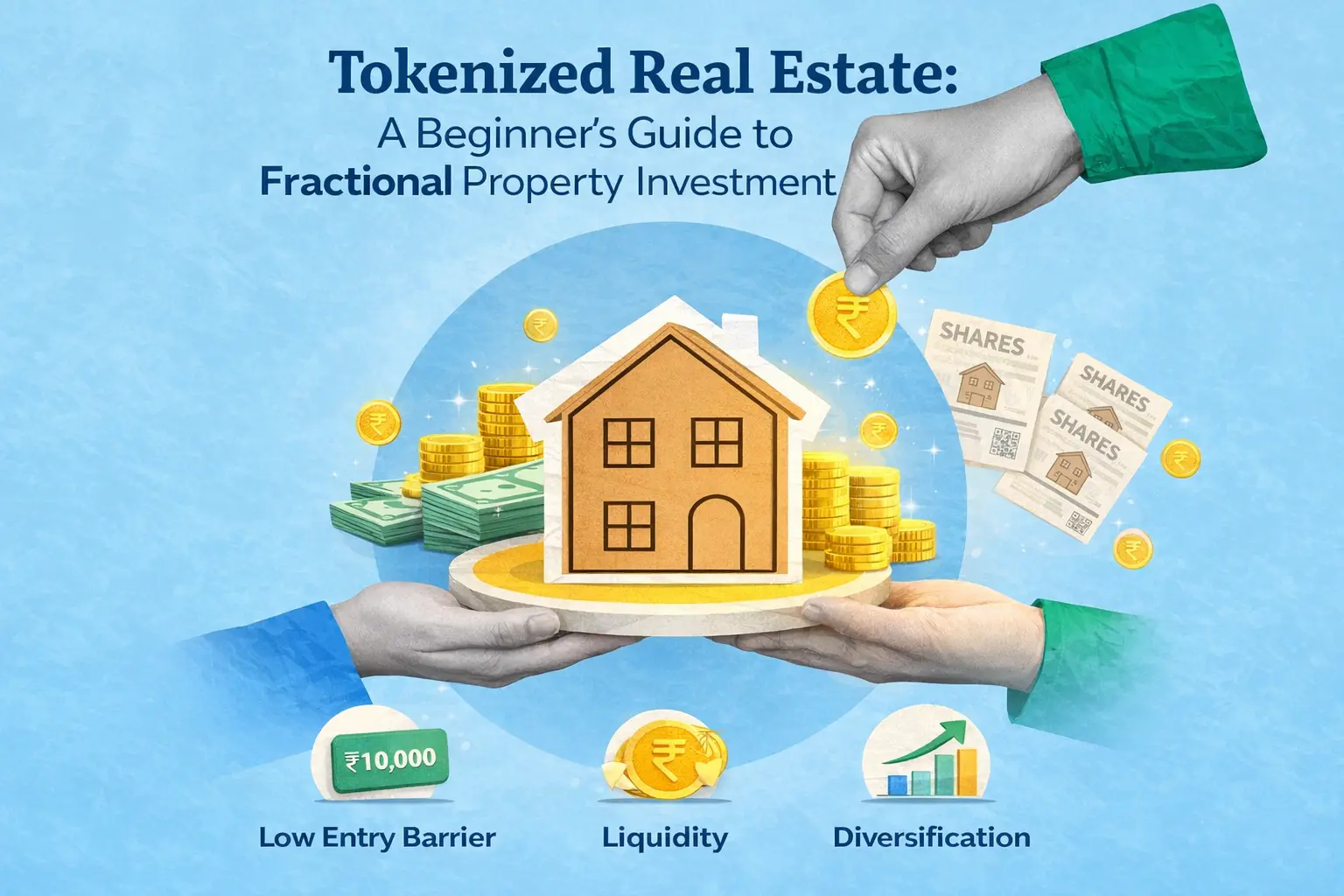
Here's what's changed: fractional investment through tokenization now lets you start investing in real estate with as little as ₹10,000.
India's real estate market is projected to reach over $1 trillion by 2030 and expand further to $5.8 trillion by 2047. Millennials and Gen Z are projected to drive 60% of all new home purchases by 2030, and fractional models are reshaping how the young generation builds wealth.
What Is Tokenized Real Estate?
At its core, tokenized real estate turns a physical property into digital tokens, each representing a small share of the asset. These tokens are created using a secure structure - usually through an SPV (special purpose vehicle) - and recorded digitally.
The idea is straightforward:
Think of tokenization as converting a physical asset into shareable digital pieces. A ₹1 crore property gets divided into thousands of tokens. You buy tokens worth ₹50,000 and own 0.5% of that property, earning capital appreciation and/or rental income proportional to your stake.
A Special Purpose Vehicle (SPV), a legal entity, holds the property on behalf of all investors. Smart contracts automatically handle rent collection, income distribution, and maintenance costs without intermediaries. So now you're buying a legally recognized fractional investment with automated returns.
How Fractional Property Investment Actually Works
You can own real estate for as little as ₹10,000 by purchasing fractional shares. Here's how the process works. Remember, the structure matters because it determines your legal protection and tax treatment.
Step 1: Property Selection and Structuring
First, a developer or platform identifies a premium property - residential, commercial, or hospitality assets. They establish an SPV that protects individual investors from direct liability.
Step 2: Legal Valuation and Tokenization
Independent valuers assess the property. The platform then creates digital tokens representing fractional investment shares. If a property is valued at ₹1 crore and divided into 1000 tokens, each token equals ₹10,000 of the property value.
Step 3: Token Issuance and Investment
Investors purchase tokens through an Initial Token Offering (ITO) or Security Token Offering (STO). You can invest in INR.
Step 4: Smart Contract Automation
Smart contracts are self-executing agreements. They automatically handle recurring tasks: collecting rent, distributing income to token holders proportional to their stake, managing maintenance costs, and even facilitating token transfers. This eliminates the need for multiple intermediaries, reducing transaction costs and speeding up processes.
Step 5: Appreciation and Rent
Once you own tokens, you're a fractional investor. If the property appreciates, your tokens become more valuable.
Why Tokenized Real Estate Matters for Your Financial Future
In Greater Mumbai, only 31% of individuals aged 35 and below own homes, compared to 74% of those aged 36-45. The average 2 BHK costs 8.5 times annual income for under-35 buyers versus 5.0 times for older buyers.
Fractional investment demolishes this barrier. A software engineer in Pune can now own a piece of a premium Mumbai office building without needing ₹50 lakhs. He or she can start with ₹50,000. Instead of locking your entire savings into one property, you could diversify across five different assets in Bangalore, Pune, and Hyderabad for the same capital.
The return potential is compelling. Premium office spaces deliver as high as 8-10% rental yields with 4-6% appreciation potential. Warehousing and logistics properties offer yields of 6-8% with 5-7% appreciation. Compare this to fixed deposits at 6.5-7%.
Here's a real example: Invest ₹50,000 in tokens for a ₹25 crore Bandra commercial building. You own 0.0002% of the property and earn a proportional rental income of ₹300-500 monthly. Use another ₹50,000 for a Bangalore tech park. Total investment: ₹1 lakh across two premium properties in two premium locations, something impossible through traditional real estate.
Benefits of Tokenized Real Estate for First-Time Investors
1. Low Entry Barriers
Traditional real estate requires ₹50 lakh to ₹2 crore in capital. Here, you can start with as little as ₹10,000 and still participate in high-quality assets.
2. Liquidity
Selling a property usually takes months. Selling tokens can be much quicker, depending on the platform and structure.
3. Diversification
Instead of putting ₹1 Cr into one flat, you could put ₹1 lakh each into 100 different properties over time. Your risk spreads, returns balance out.
4. Passive Income
Many tokenized assets generate rental yield. So rent is credited to your wallet for a property you never physically visit.
5. Transparency
With digital dashboards, you see:
occupancy
rental inflow
asset value trends
projected returns
Is Tokenized Real Estate Safe? (The Honest View)
Tokenization isn't magic; it's structure. The safety depends on:
the SPV setup
the platform's due diligence
quality of properties selected
compliance
and how exits are managed
Young investors should always check:
asset documents
transparency of rental distribution
risk factors
and the investment horizon
What You Must Know Before Investing
Regulation is clarifying. SEBI is creating pathways for fractional investment through REITs and SM-REITs frameworks. RERA compliance protects you with the same transparency rules governing traditional property.
Taxation is straightforward but requires planning. Capital gains tax applies when tokens are sold. Rental income is taxed as regular income. If you're an NRI, FEMA restrictions apply. Consult a tax advisor before investing.
Risks exist. Liquidity depends on buyer demand. Property-level risks, such as market downturns and tenant defaults, still affect token value. Platform reliability matters; choose established players with regulatory compliance and track records.
How FRAX Makes Fractional Investment Worth It?
Platforms like FRAX make this entire experience simple and beginner-friendly. They identify quality assets, create the investment structure, and offer a clean digital dashboard so users can invest small amounts and track everything easily.
For someone investing for the first time, this removes a lot of the confusion and heavy lifting traditionally associated with real estate. You focus on owning your slice; the platform handles the machinery behind it.
Your Next Step
India's median workforce age is 28 years. If you're in this demographic, you're entering peak earning years. A property appreciating at 8% annually delivers materially different outcomes if you start at 28 versus 35.
Tokenized real estate is a structural improvement to an asset class that's built generational wealth in India for decades. The platforms exist. The regulatory framework is solidifying. The only variable is your decision to start.
Research platforms. Verify SEBI registration and RERA compliance. Start with ₹10K in a single asset to understand the mechanics. Track dividend distributions. Experience the platform's service quality. Then scale as confidence builds.
The affordability crisis is real, but the solution is no longer theoretical. Fractional investment gives you access to premium real estate at a fraction of traditional entry costs. Now it’s your turn to take that first step.
Learn more
Discover more from the latest posts.