
India's Economic Growth and Real Estate Outlook
Explore India's economic growth, real estate trends, and how fractional investing can help build wealth in 2026.
India is growing at 6% to 7% a year. For an economy this size, that is fast. Manufacturing, digital services, and infrastructure spending are doing the heavy lifting. If you are trying to build long-term wealth, you cannot just ignore this. Growth drives jobs, salaries, and property prices. Here is a breakdown of what is actually happening in the Indian economy, from GDP trends to global positioning, before you decide where to put your money.
This content is for informational purposes only and does not constitute financial, legal, or investment advice.
What Does India's Economic Outlook Look Like Right Now
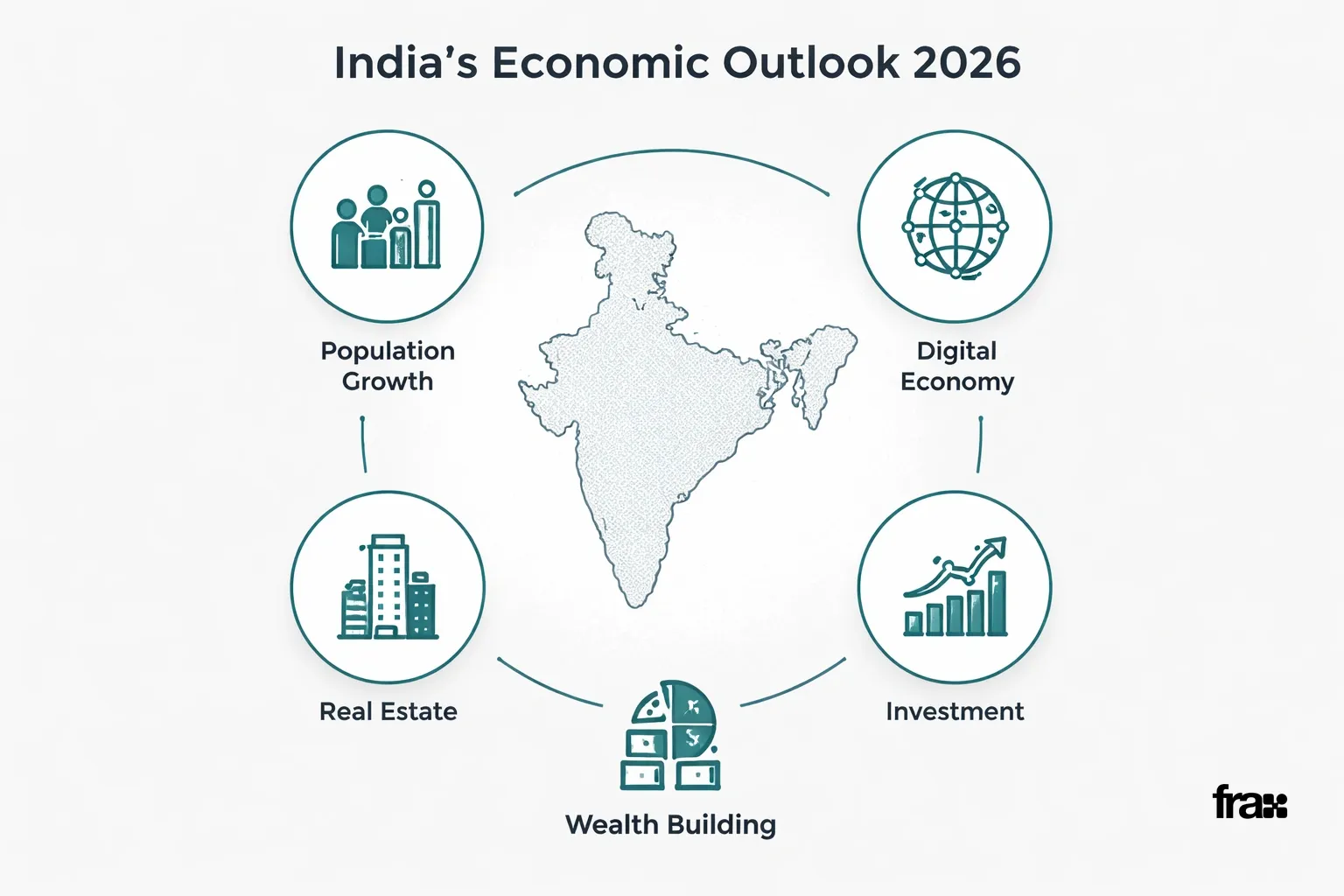
Heading into late 2026, India's economy is holding up well. People are still spending, and government policies haven't thrown any major curveballs. Inflation has cooled off compared to a few years ago, which gives households some breathing room. Private investment is picking up, too, after a slow stretch.
A few structural things explain why we aren't stalling out. We have a massive working-age population, which is a huge advantage right now. Digital infrastructure, like UPI and e-commerce logistics, has slashed transaction costs across the board. State governments are fighting to attract manufacturing, which means industrial activity is finally spreading past traditional hubs like Maharashtra and Tamil Nadu into places like Uttar Pradesh and Odisha.
It isn't all perfect, though. Commodity prices, geopolitical messes, and bad monsoons can wreck a quarterly forecast. If you are investing based on these numbers, treat every projection as a range, not a guarantee.
This content is for informational purposes only and does not constitute financial, legal, or investment advice.
Indian Economy Growth Rate: What The Numbers Suggest
We keep hearing 6% to 7% growth. That puts India ahead of most large economies, though we have come down from the crazy post-pandemic bounce-back.
But the headline number hides the story. Services still make up the biggest chunk of GDP, led by IT, finance, and BPO. Manufacturing is gaining ground, thanks to government incentives pushing local production. Agriculture is a smaller piece of the GDP pie but still employs a ton of people and is totally dependent on the weather.
Here is a simplified view of how the growth drivers stack up:
Sector | Approximate GDP Contribution | Growth Character |
|---|---|---|
Services | Largest share | Steady, export-linked |
Manufacturing | Growing share | Policy-driven, capex heavy |
Agriculture | Moderate share | Weather-dependent, employment-heavy |
Construction & Real Estate | Rising share | Urbanization-linked |
Look at that last row. As people move to cities, the demand for housing, warehouses, and office space keeps climbing. That drives employment and credit growth everywhere.
This content is for informational purposes only and does not constitute financial, legal, or investment advice.
Economic Development in India: Beyond The Headline Numbers
Economic development isn't just a GDP number. It is better roads, ports, banking access, and digital payments reaching places they never did before.
Financial inclusion is a huge deal here. The explosion in bank accounts and digital payments means a guy in a small town can now access investment markets that used to be locked off for metro dwellers. The same digital rails are letting people invest in asset classes like real estate, which historically required massive capital and paperwork.
Urbanization is the other big marker. As people move to cities for work, housing supply gets squeezed. That is exactly why fractional real estate investing has taken off for salaried professionals. If you want a step-by-step breakdown, check out how fractional real estate investing works in India.
This content is for informational purposes only and does not constitute financial, legal, or investment advice.
Start Building Your Real Estate Portfolio Today
India In The Global Economy: A Shifting Balance
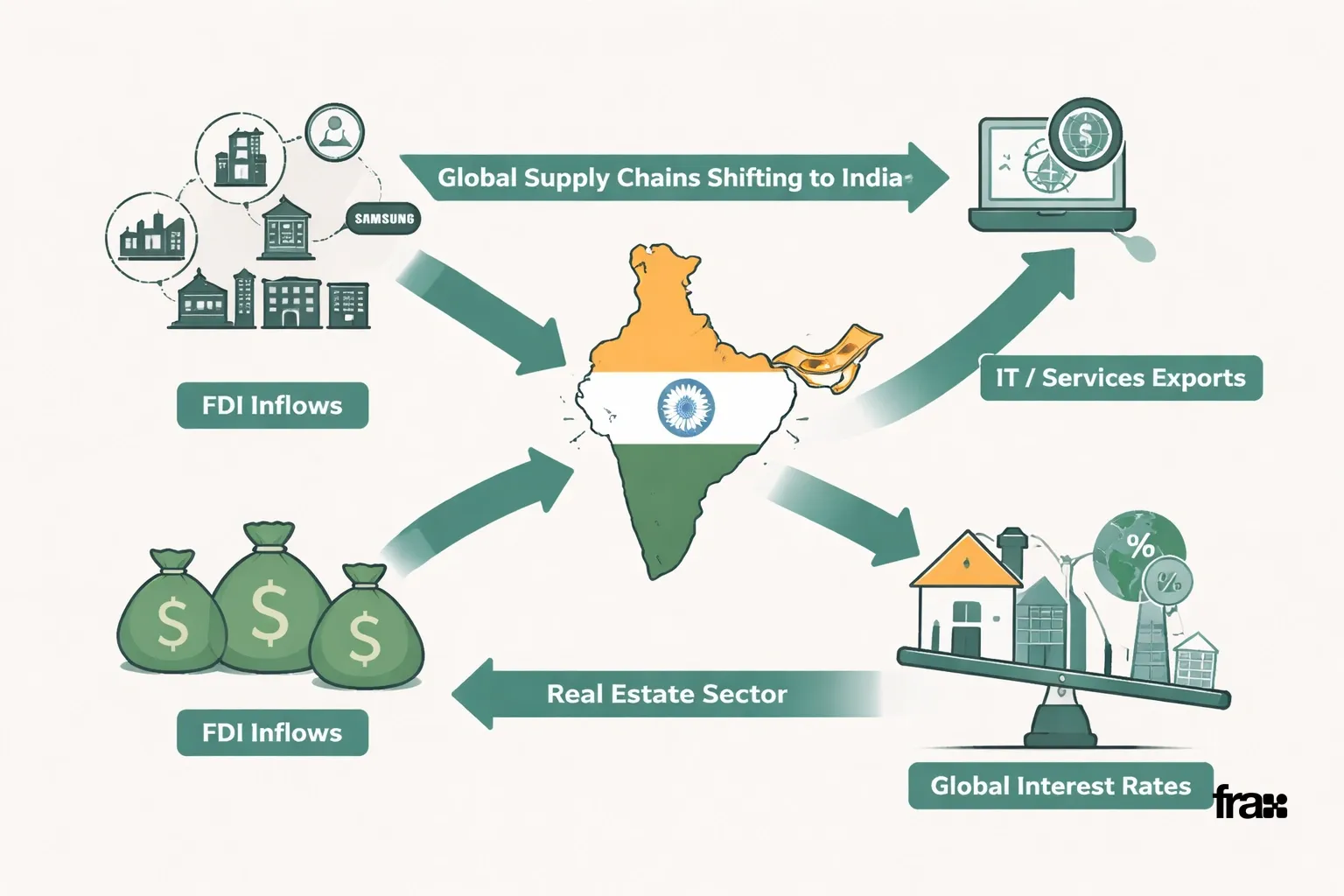
India is now a top-five economy. Global supply chains are moving away from depending on a single country for manufacturing, and India is catching some of that business.
Multinationals are setting up factories here under production-linked incentives. IT and services exports keep bringing in foreign exchange. Foreign direct investment is still flowing in, which usually means global capital is making a long-term bet on India, not just making a quick buck. But it also means our markets, including real estate, are more tied to global interest rate cycles than they used to be.
How India's Growth Story Connects To Real Estate
This content is for informational purposes only and does not constitute financial, legal, or investment advice.
When GDP grows, real estate demand follows. Higher incomes and expanding cities mean people need places to live, work, and store goods.
Commercial real estate tracks office demand from IT, finance, and manufacturing. As companies expand into tier-1 and tier-2 cities, good office and retail spaces stay full. If you want to access these assets without buying whole buildings, review this REIT investing guide for India's commercial real estate market.
Historically, premium real estate cost crores. You just couldn't afford it on a salary. Fractional models changed that. If you earn around 15 to 20 lakhs and want in, read more on how young professionals earning between 15 and 20 lakhs can access premium real estate in India.
Why Macro Trends Matter For Everyday Investors
Macro economics dictate your returns. A growing economy means people want to rent, offices get filled, and property in good locations appreciates.
Think about the connections:
More urban jobs mean people need to rent near work.
Manufacturing moving to tier-2 cities means they need warehouses.
New highways and metro lines push up property values nearby.
A stable economy means steady rent checks, unlike the wild swings of the stock market.
That is why investors are mixing stocks with real estate through fractional platforms. It lowers your overall portfolio volatility. You can read more on portfolio stability through fractional real estate.
This content is for informational purposes only and does not constitute financial, legal, or investment advice.
Explore Fractional Real Estate Opportunities Now
Risks And Watch Points In India's Economic Outlook
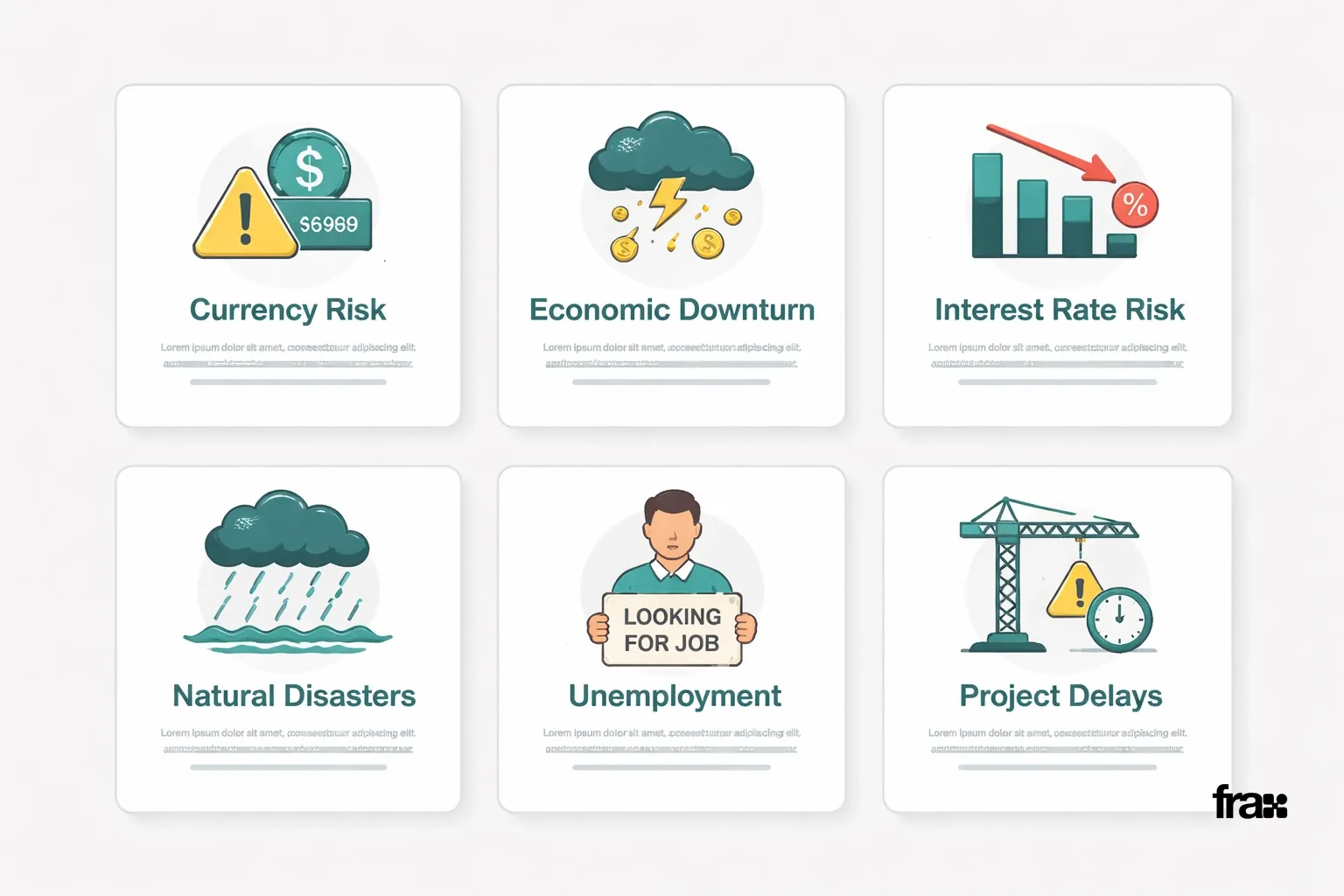
Every growth story has risks. Commodity shocks, currency drops, and interest rate hikes can mess up short-term momentum even if the long-term story is fine.
Domestically, bad monsoons hurt rural spending. We also need to create enough jobs for the millions of young people entering the workforce. Infrastructure delays still happen, even if things are getting better.
For real estate, remember that markets are cyclical. Not every city or project performs the same. You need to understand the differences between fractional ownership, REITs, and direct property ownership. Here is a good breakdown of fractional, REIT, and direct ownership models.
This content is for informational purposes only and does not constitute financial, legal, or investment advice.
Practical Takeaways For Building Wealth Amid India's Growth
This content is for informational purposes only and does not constitute financial, legal, or investment advice.
Knowing the macro economy is great, but acting on it is where people get stuck. A growing economy doesn't automatically make you rich, but it helps if you invest steadily and diversify.
A few practical steps:
Track the big trends, but don't panic over a bad quarter.
Diversify. Buy stocks, fixed income, and real estate.
Start with what you can afford. Don't wait for a massive lump sum.
Use platforms that are legally sound and transparent.
If you are new to real estate, starting small with fractional ownership is a smart move. Here is a beginner's glossary for fractional real estate investment in India to help you learn the terms first.
Note: Investors hold direct beneficial partnership interests in dedicated LLP SPVs, not direct individual property titles. Understand this before you invest.
Final Thoughts On India's Economic Path Forward
India is young, digitizing, and urbanizing fast. The growth won't be a straight line, but the core drivers are still there.
Treat macro trends as context, not a crystal ball. Combine that with a diversified portfolio, including newer models like fractional real estate, to build resilience. If you want to see how global trends are shaping our market, read why fractional real estate went global and what it means for India.
This content is for informational purposes only and does not constitute financial, legal, or investment advice. Investors hold direct beneficial partnership interests in dedicated LLP SPVs, not direct individual property titles. Past performance and realized XIRR figures are historical and do not guarantee future property returns or rental yields.
Frequently Asked Questions
This content is for informational purposes only and does not constitute financial, legal, or investment advice.
Q: What is India's current economic growth rate range? A: Most estimates put it between 6% and 7% a year, though exact numbers change based on who is reporting.
Q: How does economic development in India affect real estate demand? A: More development means urbanization and higher incomes, which drives demand for residential, commercial, and logistics real estate.
Q: Why is India considered important in the global economy? A: We are a top-five economy by nominal GDP, and we are a big part of global manufacturing diversification, services exports, and foreign investment.
Q: Can everyday investors benefit from India's economic growth through real estate? A: Yes. People use fractional real estate platforms to get into property markets tied to our growth, without needing huge lump sums.
Q: What risks should investors watch in India's economic outlook? A: Watch out for global commodity volatility, currency drops, bad monsoons hurting agriculture, and uneven infrastructure growth.
Q: Is fractional real estate the same as owning a property title directly? A: No. You usually hold beneficial partnership interests in an LLP SPV, not a direct individual property title.
Learn more
Discover more from the latest posts.