
2026: Fractional Real Estate India – Top Cities & Tips
Top Indian cities & tips for fractional real estate investing. Start with ₹10,000, enjoy liquidity & grow your portfolio easily.
Picking the "best" place to invest in India isn't about finding a magic city. It's about matching your budget, your timeline, and your risk tolerance to an asset that fits. In 2026, that usually means weighing fixed deposits, mutual funds, stocks, and increasingly fractional real estate in high-growth cities.
Things look different than they did five years ago. You don't need a suitcase of cash to start investing. Digital platforms have lowered the entry bar from lakhs to thousands. Here's where beginners are actually putting money right now, and how to think about location without overcomplicating it.
This content is for informational purposes only and does not constitute financial, legal, or investment advice.
What actually matters for beginners
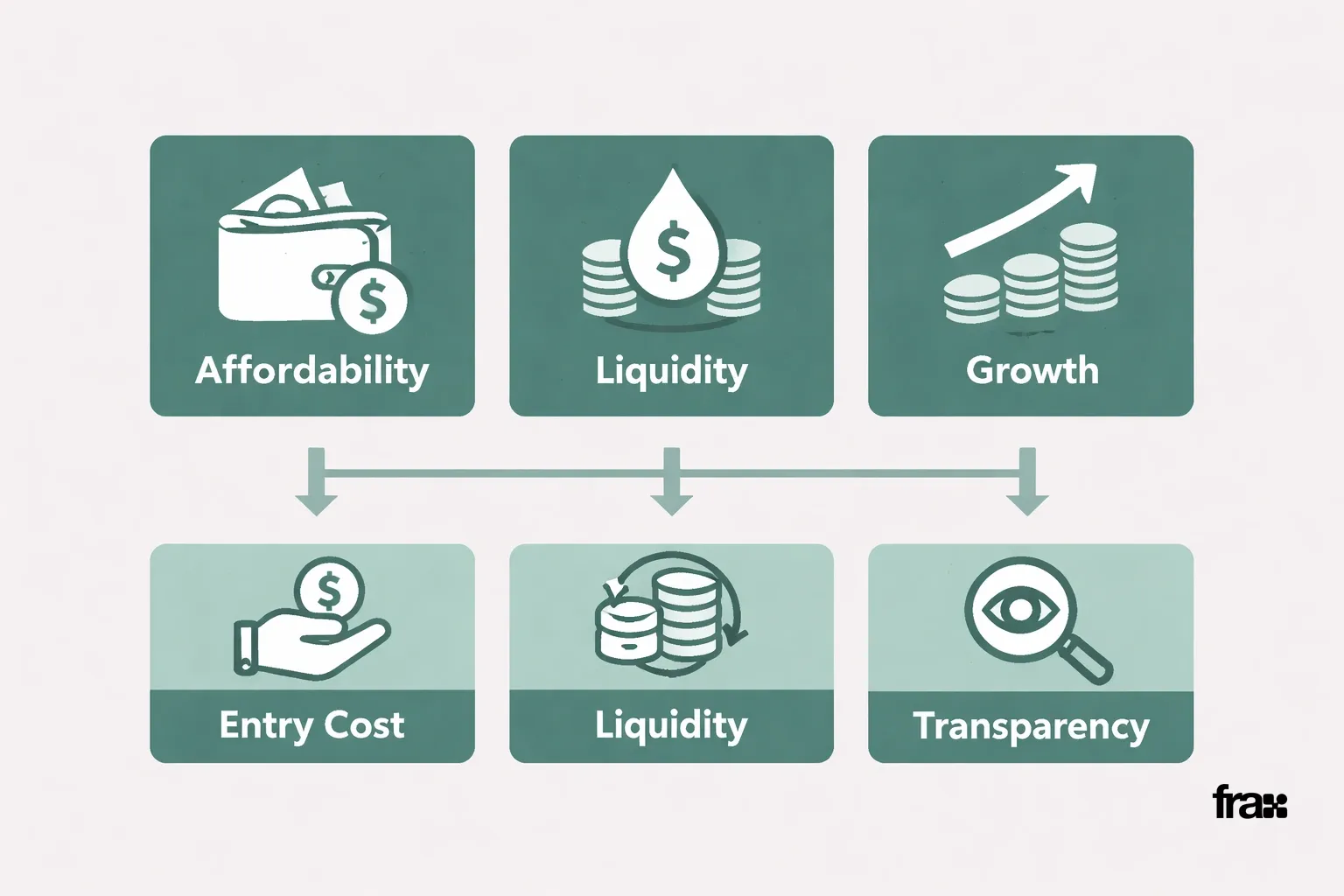
The "best" location isn't a pin on a map. It's a balance of three things: affordability, liquidity, and growth. You want an asset that doesn't require crores to enter, lets you exit without a legal headache, and actually grows.
Old advice told beginners to buy metro real estate or blue-chip stocks. That ignored the reality for professionals earning ₹15–20 lakh a year you probably aren't buying a flat in Mumbai. A better filter looks like this:
Entry cost: Can you start with ₹10,000, or do you need ₹1 crore?
Liquidity: If you need cash next week, can you get it?
Transparency: Is your money sitting in a regulated escrow, or is it just "trust me, bro"?
Cities like Bengaluru, Pune, Hyderabad, and Gurugram have the rental demand and infrastructure growth. But buying there directly is tough. Fractional models are the workaround they let you access those markets without buying the whole building.
This content is for informational purposes only and does not constitute financial, legal, or investment advice.
Comparing your options
Most beginners stick to the usual suspects: fixed deposits, mutual funds, stocks, gold, and real estate. The trade-offs are pretty standard.
Here's the breakdown:
Investment Type | Typical Entry Cost | Liquidity | The Catch |
|---|---|---|---|
Fixed Deposits | ₹1,000+ | Moderate (penalty applies) | Returns barely beat inflation |
Mutual Funds (SIP) | ₹500+ | High | Market swings |
Direct Stocks | ₹100+ | Very high | You need time and skill |
Gold (Digital/Physical) | ₹1,000+ | Moderate | Storage costs, making charges |
Fractional Real Estate | ₹10,000+ | Buy & sell anytime | Still a new concept |
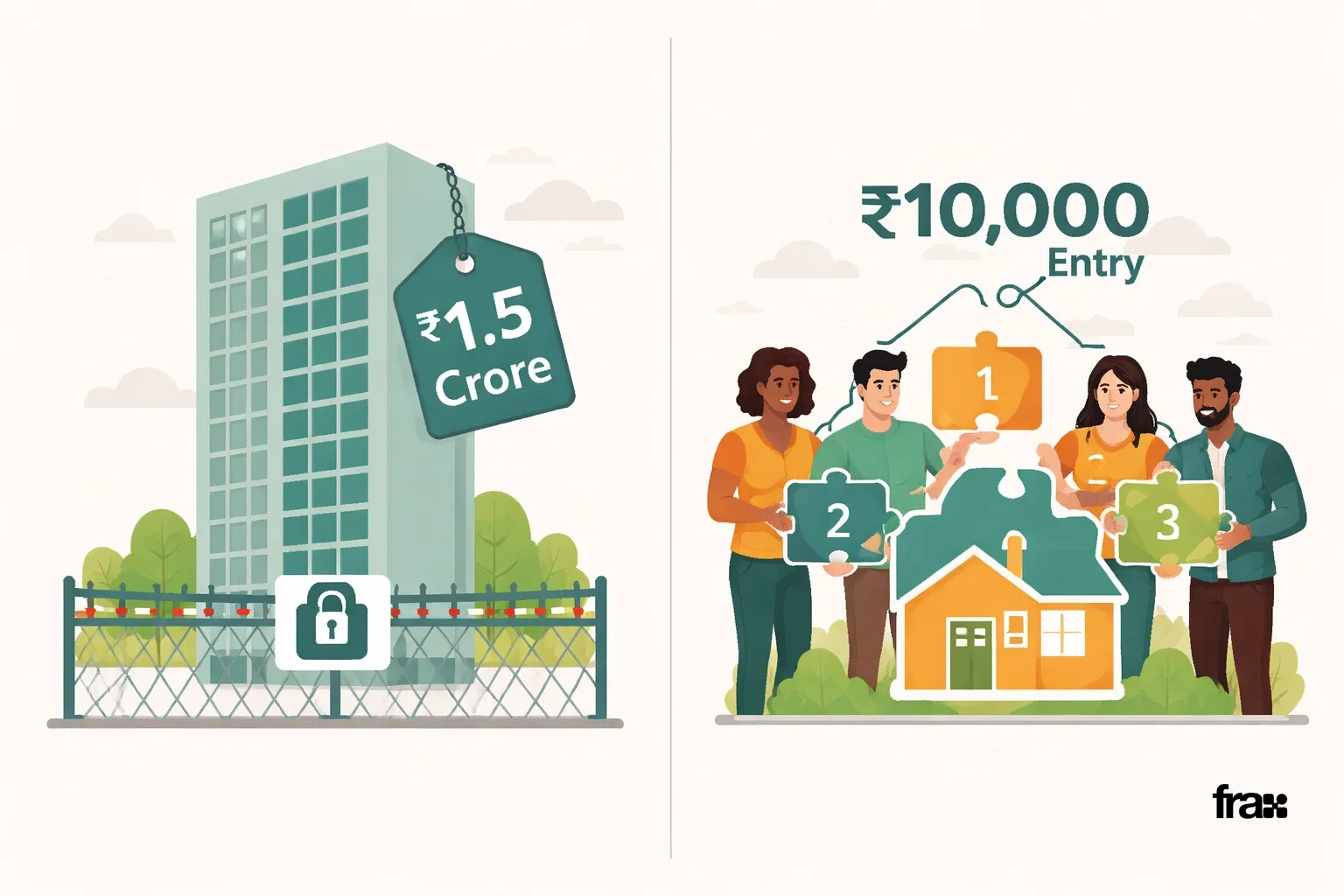
Real estate used to be absent from this list for beginners. Who has ₹1.5 crore for a 2-BHK? Fractional real estate changes the math. You buy a slice of a property, not the whole thing. For the nitty-gritty on how this works, see our guide on fractional real estate investing for beginners in India.
This content is for informational purposes only and does not constitute financial, legal, or investment advice.
Why people still want real estate
Indian households love real estate. It's physical. You can see it. The problem has always been access, not demand.
If you're earning a decent salary, you've watched prices in cities like Bengaluru or Pune sprint past what you can afford. A decent 2-BHK in a good area often crosses ₹1.5 crore. That price tag benches a lot of aspiring investors who still want property exposure.
Fractional ownership plugs this gap. You buy a fraction of a vetted property through an LLP. Investors hold direct beneficial partnership interests in dedicated LLP SPVs, not direct individual property titles. It's a different beast than a traditional home loan.
This content is for informational purposes only and does not constitute financial, legal, or investment advice.
Explore Premium Properties Starting at ₹10,000
How fractional real estate opens the door
This content is for informational purposes only and does not constitute financial, legal, or investment advice.
Platforms like FraX get around the "crore barrier" by structuring each property under a dedicated LLP. Investors hold direct beneficial partnership interests in dedicated LLP SPVs, not direct individual property titles. You don't hold the title deed to a flat, but you do get the economic upside.
This structure hits the three beginner pain points:
Low entry: Start at ₹10,000.
Liquidity: FraX uses a "Buy & Sell Anytime" model. No lock-in.
Security: Money flows through an ICICI Bank escrow, watched by Universal Trustees.
FraX launched in November 2025, started by two IIT-BHU alumni, Prabhav Tanay (CEO) and Tushar Chaudhary. They've hit 40,000+ downloads, a 4.8★ rating on the app stores, and have deployed over ₹3 crore. Just keep in mind: you're buying into an LLP SPV, not getting your name on a property title.
If you want to see how this stacks up against REITs or buying a flat yourself, check our comparison on fractional ownership vs REITs vs direct ownership.
Where to look: Best cities for real estate
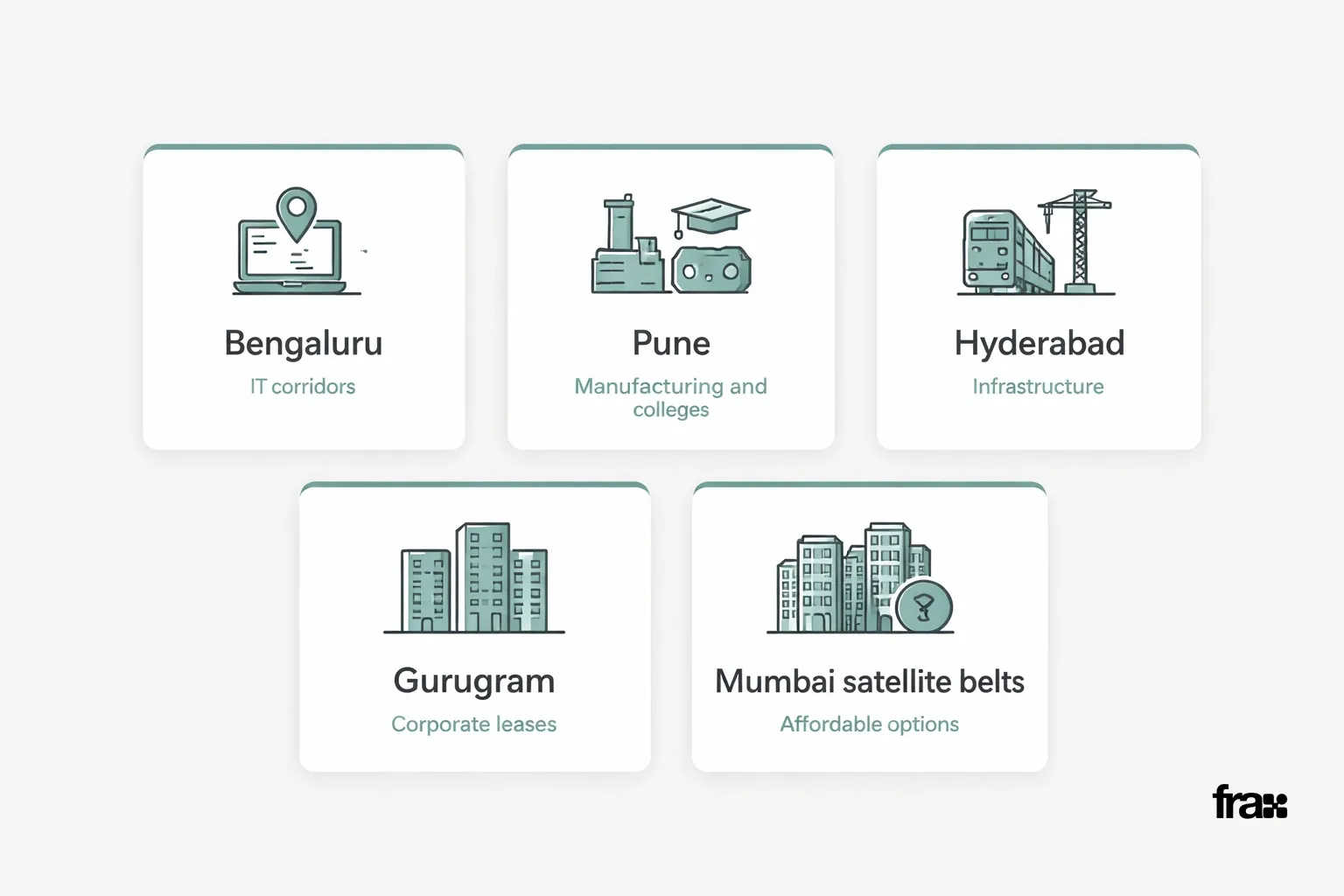
You want cities where people want to rent and infrastructure is actually happening. Heading into 2026, the list usually includes Bengaluru, Pune, Hyderabad, Gurugram, and Mumbai's satellite belts.
Each has a different logic. Bengaluru runs on IT corridors. Pune has manufacturing and colleges. Hyderabad is spending big on infrastructure. Gurugram pulls corporate leases.
We go deeper in our guide to the top cities for fractional real estate investment in India. If location is your main blocker, read that next.
This content is for informational purposes only and does not constitute financial, legal, or investment advice.
Choosing without the stress
Figure out your goal first, then pick the location. Saving for five years looks different than parking money for ten. Strategy first, map second.
Run this check before you spend a rupee:
Time horizon: Wealth building or short-term parking?
Ticket size: Can you test the waters with a small amount?
Legal structure: Escrow? Trustee? Documentation?
Exit: Can you sell when you want, or are you stuck?
Diversification: Don't bet everything on one city.
Beginners often chase the "hot" city and ignore the legal structure underneath. We walk through the pre-investment steps in our guide on fractional real estate for beginners.
This content is for informational purposes only and does not constitute financial, legal, or investment advice.
Getting started
Smart beginners mix accessible instruments. Spreading money across mutual funds, gold, and fractional real estate hedges against any single market crash.
FraX is built for professionals earning ₹15–20 lakh who are priced out of premium real estate. About 80% of their users are under 35. The fees are simple: 1% to buy, 1% to sell. No hidden brokerage layers.
We dig into the math for this specific income bracket in our article on how young professionals with ₹15–20 lakh salaries can access premium real estate.
Start Building Your Real Estate Portfolio Today
This content is for informational purposes only and does not constitute financial, legal, or investment advice.
Past performance is just that past. It doesn't guarantee next year's rent or resale value. Treat comparisons as research, not advice. Questions? Hit up the contact page or check the channel partner program. More reads are on the FraX blog.
Common questions
Q: What is the best place to invest in India for a complete beginner?
A: There isn't one. It depends on your money and your nerves. Digital platforms (mutual funds, fractional real estate) are popular mainly because the entry fee is low.
Q: Can I invest in real estate in premium cities without buying a full property?
A: Yes. That's the point of fractional real estate. Platforms like FraX let you buy a share via an LLP, starting at ₹10,000.
Q: Is fractional real estate a regulated REIT?
A: No. These are LLP SPVs. You hold a partnership interest, not a property title, and they aren't SEBI-registered REITs.
Q: How liquid is it compared to stocks?
A: FraX offers "Buy & Sell Anytime" with no lock-in, which beats traditional real estate. But it's not as instant as selling a stock on an exchange.
Q: Which cities should I consider?
A: Bengaluru, Pune, Hyderabad, and Gurugram are the standard picks for strong fundamentals. See the specific micro-market data in our city ranking guide.
Q: Is my money safe?
A: FraX uses an ICICI Bank escrow and Universal Trustees as an independent trustee. The legal docs exist, but like any investment, you're taking on risk.
This content is for informational purposes only and does not constitute financial, legal, or investment advice.
Learn more
Discover more from the latest posts.