
Fractional Real Estate Returns: Appreciation vs Rental Yield
See how fractional real estate returns work: capital appreciation, rental yield and liquidity, with FraX's 1% fees and ₹10,000 entry explained.
Fractional real estate returns come from three places: capital appreciation, rental yield, and the ability to exit when you actually want to. On FraX, that combination is what turns a ₹10,000 stake into a real ownership position, not a lottery ticket.
For years, profit in Indian real estate meant buying a flat, waiting, and hoping the market moved your way. You needed deep pockets and a lot of patience. In 2026, fractional platforms like FraX are changing the entry ticket. You don't need crores upfront anymore, and understanding exactly where the profit comes from and where it doesn't is what separates investing from gambling.
This content is for informational purposes only and does not constitute financial, legal, or investment advice.
How Do Returns Work in Fractional Real Estate?
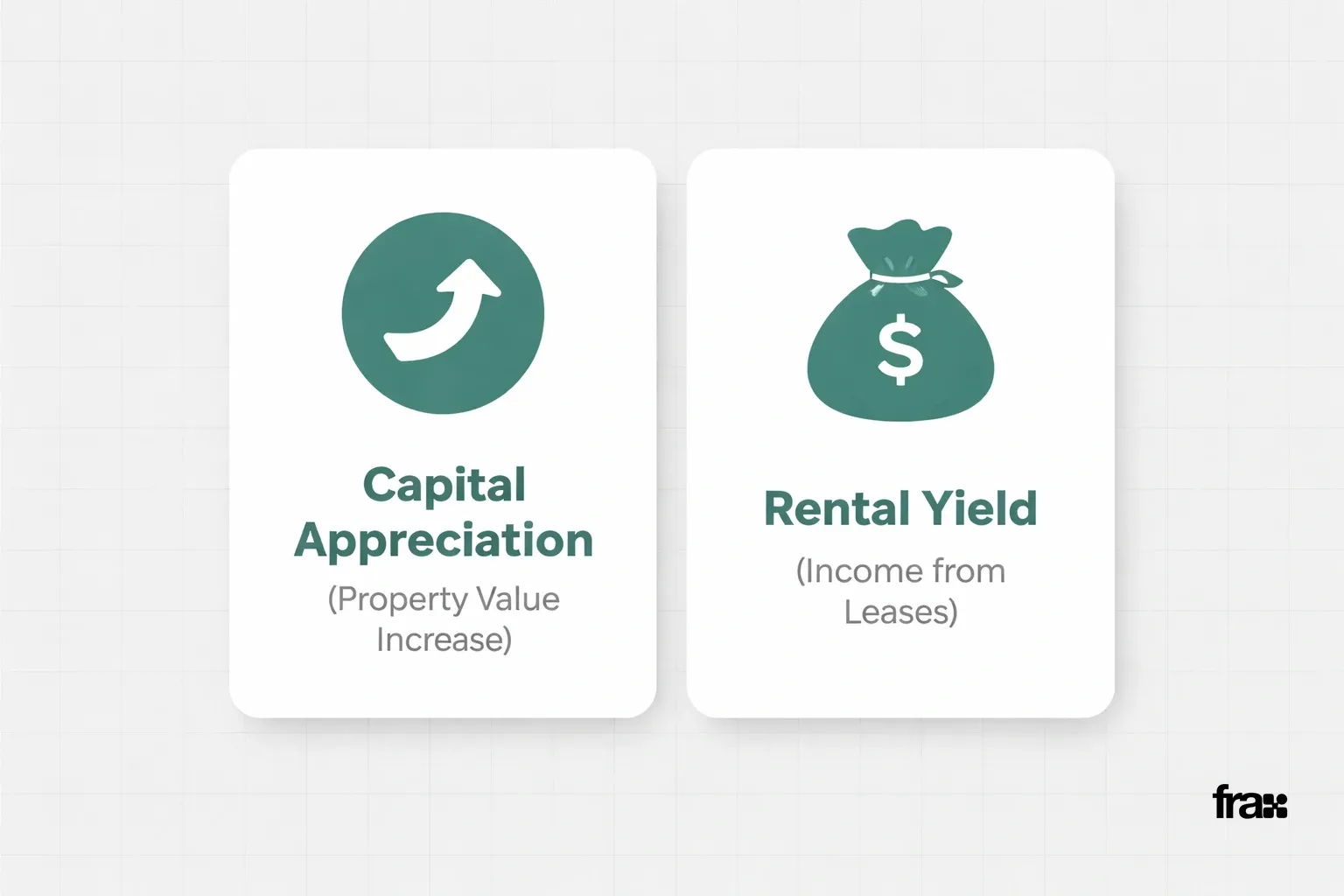
Returns in fractional real estate come from the same two sources as traditional real estate: capital appreciation and rental yield. Appreciation is the property value going up over time. Rental yield is the income the property throws off while you hold it. There is no third, hidden lever.
Some fractional models built around vacation homes add a lifestyle layer, things like complimentary nights or personal-use weeks. FraX is not built that way. Its properties are income-generating assets, so the value to you is financial: appreciation plus rent, not usage perks. If a platform is promising both a rental cheque and free stays on the same asset, read the fine print carefully.
Developers have used the appreciation-plus-rent combo for decades. A commercial building in a growing district goes up in value because demand rises. It also throws off rent from the businesses leasing space. It's not magic, it's location, demand, and decent management. Fractional models don't change that math. They just change who gets to play. You used to need ₹1 crore for premium commercial assets; FraX drops that to ₹10,000. You can see the full mechanics in this beginner's guide to fractional real estate investing.
Frax Real Estate: How the Fractional Ownership Model Works
On FraX, each property is held inside its own dedicated legal structure so returns flow back to investors cleanly. Fractional real estate pools investor capital into a single property via a dedicated LLP SPV: one property, one LLP. Investors hold direct beneficial partnership interests in dedicated LLP SPVs, not direct individual property titles.
This setup keeps property management separate from ownership. The LLP collects rent, pays bills, and distributes the surplus to partners. When the property sells, appreciation flows back to you based on your stake. It's how developers have run portfolios for decades, just cut into smaller, tradeable pieces. That legal nuance matters if you're comparing this to other options; this rundown of top real estate investment options in India covers how fractional stacks up against direct ownership and other routes.
Start Building Your Real Estate Portfolio Today
Capital Appreciation vs Cash Flow: Which Matters More?
Neither one matters more on its own, they solve different problems. Capital appreciation is the paper gain in what the asset is worth; you only realise it when you sell. Cash flow, the rent hitting your account while you hold, is the part you can use right now.
Factor | Capital Appreciation | Cash Flow (Rental Yield) |
|---|---|---|
When you get it | Only when the property is sold | Ongoing, while you hold your stake |
Depends most on | Location demand over years | Occupancy and lease terms |
Volatility | Higher, moves with the market | Lower, more predictable per period |
Best for | Long-horizon wealth building | Investors who want visible, periodic income |
A balanced fractional portfolio usually captures both: modest rental income along the way, and the bulk of the gain realised at exit or sale. Past performance and realized XIRR figures are historical and do not guarantee future property returns or rental yields.
How Much Can You Actually Earn From Fractional Real Estate?
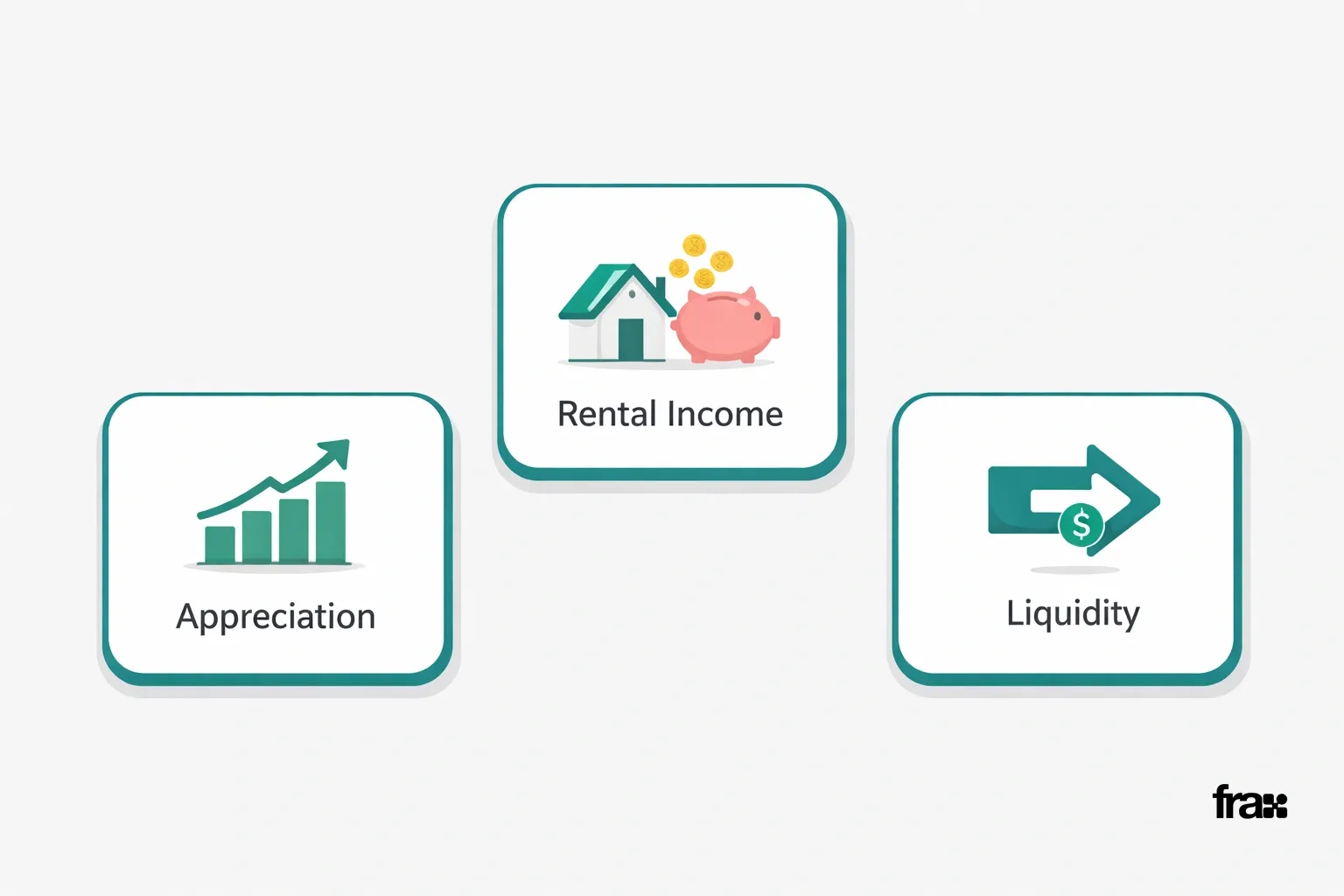
The earning potential comes from combining appreciation, rental income, and the ability to exit on your own timeline. FraX highlights the opportunity for returns up to 92% over a 5-year period. That's a long horizon, not a quick flip, and past performance and realized XIRR figures are historical and do not guarantee future property returns or rental yields.
Why does the timeline matter so much?
Appreciation takes time. Property values rarely spike overnight. They build over years of demand.
Rental income adds up. Even modest yields compound if you reinvest them instead of spending them.
Liquidity changes what you keep. An investor who can exit when conditions are favourable captures gains more efficiently than one locked in for a decade.
This is where FraX's "Buy & Sell Anytime" model matters. You aren't stuck waiting for a physical buyer. You can respond to the market on your own schedule, which is a real structural shift from the old model, even if it doesn't change what a specific property is worth.
Traditional vs Frax Fractional Real Estate: What Changes?
Factor | Traditional Real Estate | Fractional Real Estate (FraX) |
|---|---|---|
Entry capital | ₹50 lakh to ₹1 crore+ | ₹10,000 minimum |
Ownership structure | Direct title deed | Beneficial interest in a dedicated LLP SPV |
Liquidity | Low, broker-dependent | Digital, no lock-in emphasis |
Profit sources | Appreciation + rental income | Appreciation + rental income |
Transaction oversight | Varies, often informal | ICICI Bank escrow, overseen by Universal Trustees |
Paperwork | Extensive, manual | Digital, structured |
This table isn't about which model is universally better. It's about how access has changed. The economics haven't shifted, appreciation and rent still drive the return. Who gets a slice has changed. For a deeper look at who this benefits most, read how young professionals earning ₹15 to 20 lakh can finally access premium real estate through this new era for young investors.
What Are Frax's Fees, and How Do They Affect Your Returns?
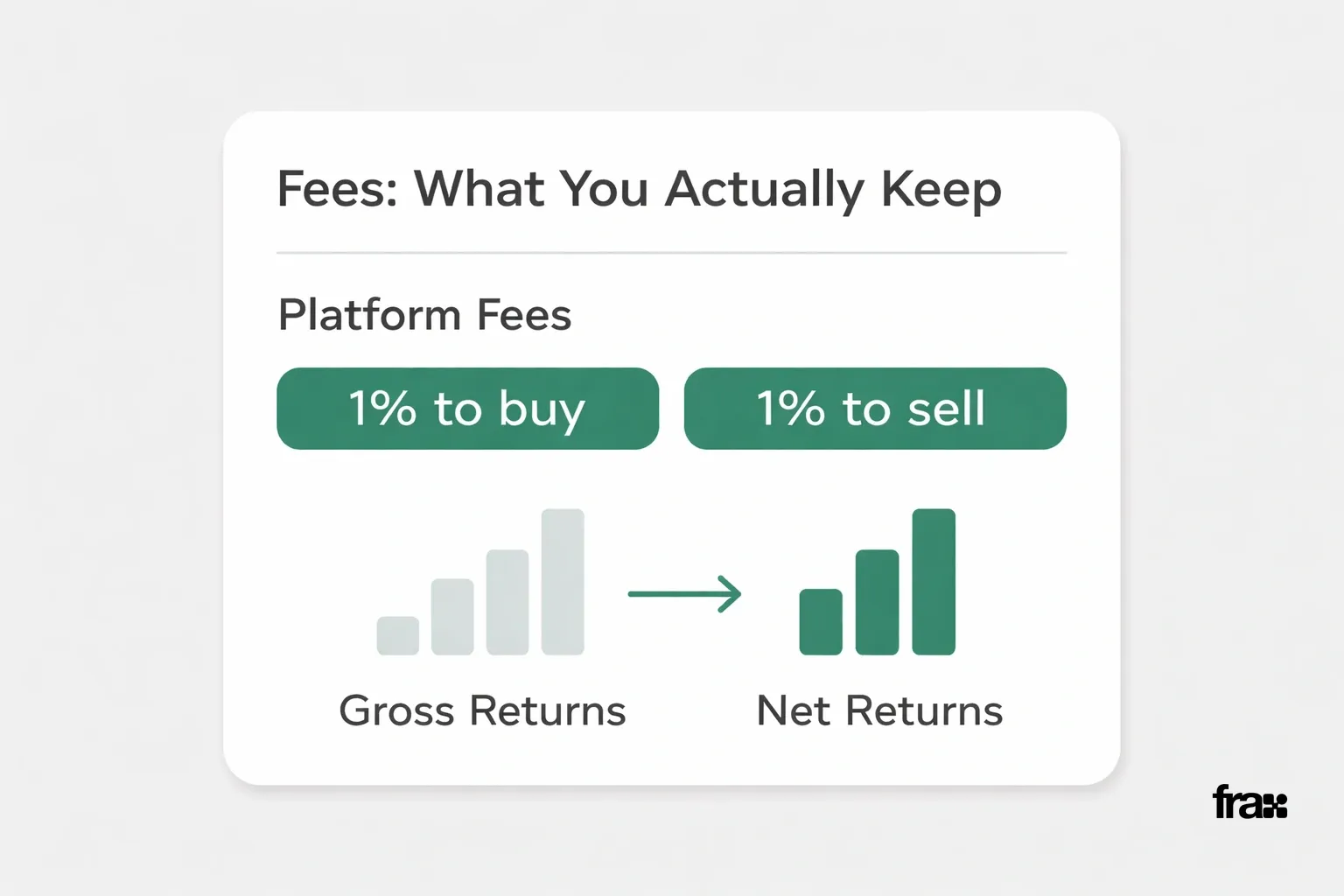
FraX charges a flat 1% buy fee and a 1% sell fee, and nothing else. That's the entire fee structure, no hidden layers stacked on top.
Gross returns and net returns are different numbers. A property might appreciate nicely, but transaction costs eat into the final payout. Transparent, flat fees mean you can calculate your real expectations without guessing, which matters more the longer you hold a position.
See How Transparent Fees Protect Your Returns
Is Frax Real Estate Legit? The Security Behind the Structure
Yes: FraX runs every transaction through an ICICI Bank escrow account, independently overseen by Universal Trustees, and each property sits inside its own legally documented LLP SPV. That's institutional-grade oversight you don't get with a handshake deal.
FraX is built by FraX Digital Private Limited, founded in November 2025 by Prabhav Tanay (CEO) and Tushar Chaudhary, both IIT-BHU alumni. The platform has crossed 40,000+ app downloads with a 4.8 star rating on the App Store and Play Store, and has deployed ₹3+ crore in cumulative investor capital so far.
Old-school transactions rely on brokers, stacks of paper, and trust in a handshake. It works, but it's opaque. A structured escrow with legal documentation for every SPV gives you a clear paper trail for how your capital moves at every stage.
Who Does Fractional Real Estate Work Best For?
Younger investors and working professionals benefit most from this model. Reports indicate 80% of FraX users are under 35, and many earn ₹15 to 20 lakh salaries, exactly the bracket that was previously priced out of premium real estate.
Starting early matters. A 28-year-old investing ₹10,000 today has decades to let appreciation and rental income compound. The old model didn't allow that ticket size. Removing the brokers, paperwork, and crore-level barriers has opened up a profit engine that used to be reserved for the wealthy.
How Do You Build a Diversified Fractional Portfolio?
You diversify by spreading smaller amounts across multiple properties instead of putting all your capital into one asset. Instead of dumping cash into a single flat, you can allocate ₹10,000 chunks across several properties, closer to how institutional portfolios are built.
If one asset underperforms, it doesn't sink the whole portfolio. That stability is the main upside of fractional exposure over a concentrated bet on one property. Location still matters here too; this breakdown of top cities for fractional real estate investment is worth reading before you decide where to spread your capital.
The core of real estate profit hasn't changed: appreciation plus income. What's changed in 2026 is who can access it, how transparent the process is, and how fast you can move. Platforms built on structured legal ownership, escrow-backed transactions, and low entry tickets are reshaping what building wealth through property actually looks like.
This content is for informational purposes only and does not constitute financial, legal, or investment advice.
Frequently Asked Questions
Q: How do returns work in fractional real estate, is the value mainly in capital appreciation, rental yield, or lifestyle usage?
A: On FraX, value comes from capital appreciation and rental yield, not lifestyle perks like complimentary nights. Properties are income-generating assets: you gain when the property appreciates and while it earns rent. There's no usage-based benefit layered on top.
Q: What is Frax real estate investment?
A: It's an app that lets you buy a beneficial partnership interest in a dedicated LLP that holds a single property, starting at ₹10,000. You earn through appreciation and rental income, and can buy or sell your position digitally without a lock-in period.
Q: What is the difference between capital appreciation and cash flow, and which matters more?
A: Capital appreciation is the gain in property value, realised only when you sell. Cash flow is the rent you collect while holding. Neither is inherently better; appreciation suits long-term wealth building, cash flow suits investors who want visible, periodic income.
Q: Is Frax real estate legit?
A: Yes. Transactions run through an ICICI Bank escrow account overseen by Universal Trustees, each property has its own legally documented LLP SPV, and the platform has 40,000+ downloads with a 4.8 star rating across app stores.
Q: What fees does Frax charge?
A: A flat 1% fee to buy and 1% fee to sell, with no other hidden charges layered on top of your investment.
Q: Do I directly own the property?
A: No. Investors hold direct beneficial partnership interests in dedicated LLP SPVs, not direct individual property titles. The LLP holds the asset; your stake represents your share of that LLP.
Learn more
Discover more from the latest posts.


