
Top Cities for Fractional Real Estate Investment in India 2026
Top Indian cities for fractional real estate 2026. Invest from ₹10,000 in Bengaluru, Hyderabad, Pune, Mumbai.
If you're hunting for the "best place" to invest in India in 2026, stop looking for a single city. The real answer isn't a pin on a map. It's premium real estate accessed through fractional ownership. This model lets you put money into high-value commercial and residential assets across top-tier cities, starting with just ₹10,000. No crores required. No broker headaches.
Where you put your money matters more than usual right now. Inflation is nibbling at savings, equity markets feel like a gamble, and buying a flat in a metro city costs more than most people earn in a decade. This post breaks down where to actually invest in India in 2026, comparing asset classes and cities so you can make a call that makes sense for you.
This content is for informational purposes only and does not constitute financial, legal, or investment advice.
Why Location Still Matters
Location is the brute force of real estate returns. A mediocre building in the right micro-market will beat a luxury flat in a dead zone almost every time. This holds true whether you own the whole flat or just a fraction of a commercial building.
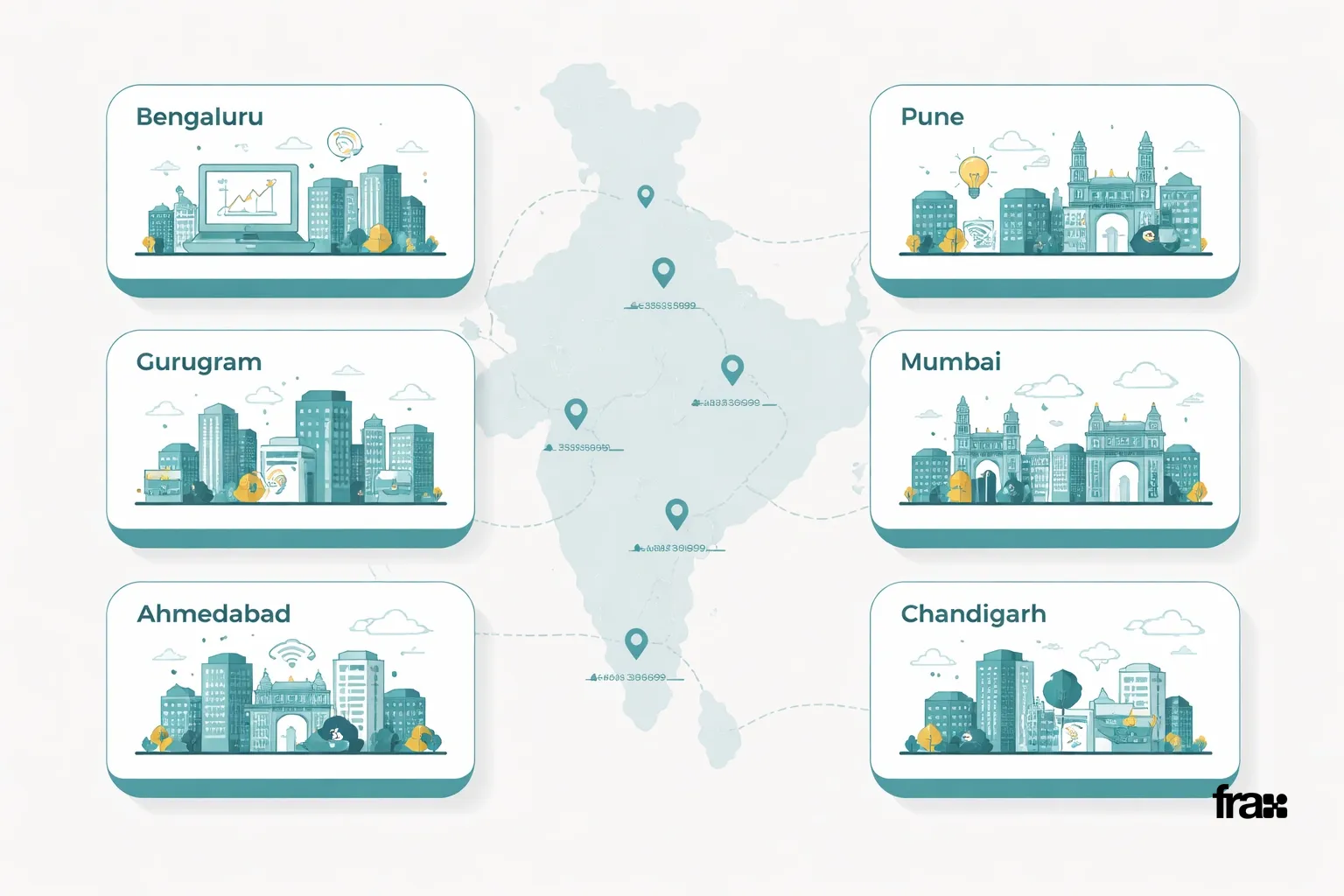
The Indian map has changed a lot in the last few years. Everyone talks about Bengaluru, Pune, Hyderabad, and Gurugram because that's where the IT growth, infrastructure upgrades, and corporate expansion are. Mumbai still costs a fortune. Tier-2 cities like Ahmedabad and Chandigarh are getting interesting, but they're earlier in their growth cycle.
The problem isn't spotting these locations. It's the entry fee. You can't just walk into a Grade-A office park in Bengaluru with ₹10 lakh. That's the gap platforms like FraX try to fill.
This content is for informational purposes only and does not constitute financial, legal, or investment advice.
Best Asset Classes to Invest in India Right Now
This content is for informational purposes only and does not constitute financial, legal, or investment advice.
Real estate is still one of the few ways to build long-term wealth in India without watching stock tickers all day. It’s tangible, it has history, and it offers diversification that a pure equity portfolio just doesn't.
Here's how the options stack up for regular investors:
Asset Class | Minimum Entry | Liquidity | Complexity |
|---|---|---|---|
Direct Property Purchase | ₹50 Lakh+ | Low | High (paperwork, brokers) |
Stock Market | ₹500+ | High | Medium |
Fixed Deposits | ₹1,000+ | Medium | Low |
Fractional Real Estate | ₹10,000+ | High | Low |
Fractional real estate is the weird middle child that actually works. Investors hold direct beneficial partnership interests in dedicated LLP SPVs, not direct individual property titles. You get the stability real estate is known for, plus the liquidity that fintech apps have normalized. You aren't forced to choose between "safe but stuck" and "risky but quick." If you want to understand the nuts and bolts, check out our guide on Fractional Real Estate Investing for Beginners in India 2026.
Best Cities in India for Real Estate Investment in 2026
This content is for informational purposes only and does not constitute financial, legal, or investment advice.
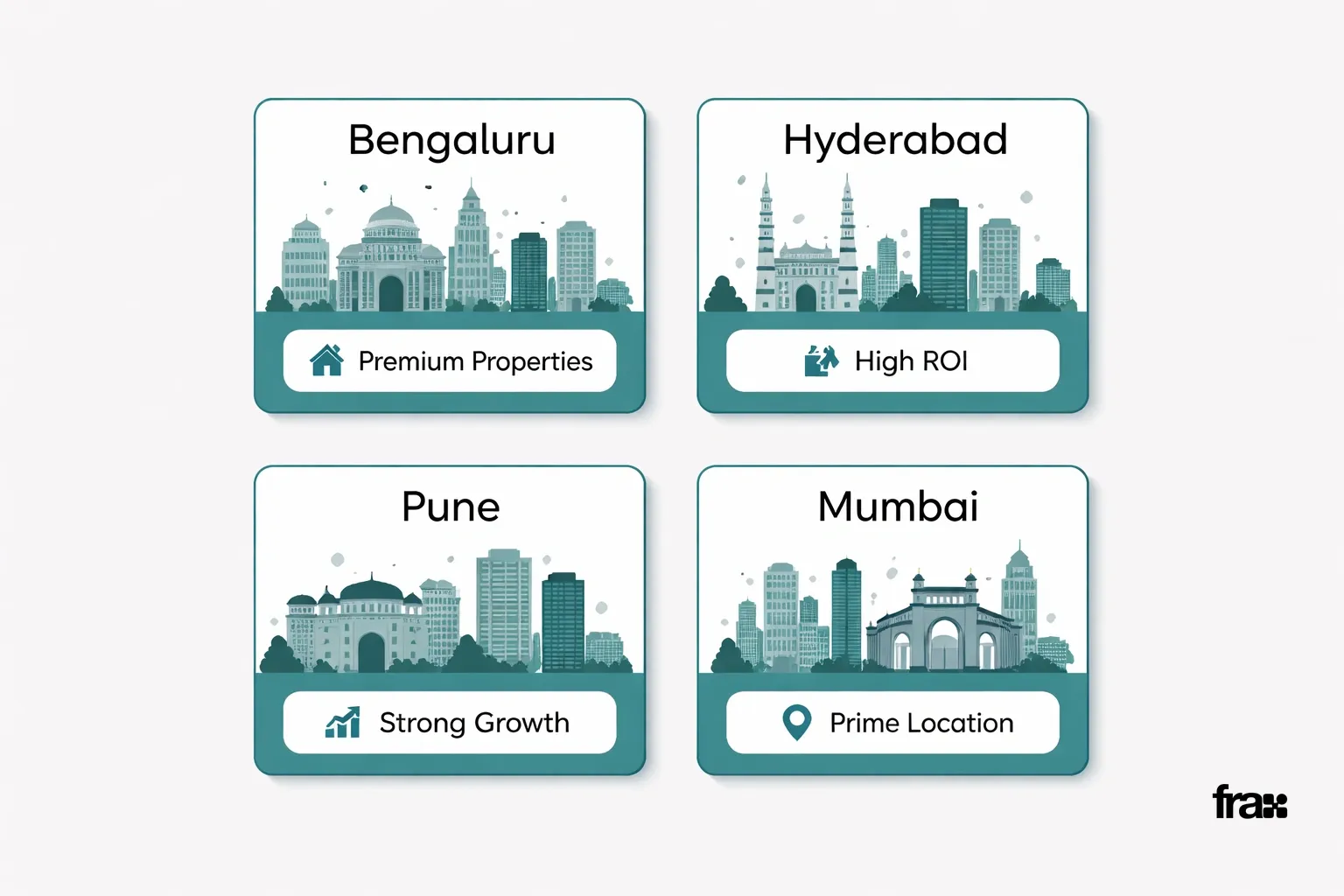
Bengaluru is still the default answer for commercial real estate. The tech economy, rental demand, and infrastructure expansion aren't slowing down. For fractional investors, it's usually the first stop for Grade-A office spaces and warehousing.
But other cities are in the conversation:
Hyderabad: IT and pharma are pushing office demand hard.
Pune: It's a mix of manufacturing and IT, which is good for diversification.
Gurugram: Corporate HQs and retail keep pushing prices up.
Mumbai: Land is scarce, so premium business districts stay expensive.
Chennai: Manufacturing and auto investments keep things steady.
Each has a different vibe. Bengaluru and Hyderabad are for growth. Mumbai is for stability. The good thing about fractional platforms is you don't have to marry one city. You can spread your ₹10,000 across three or four of them.
Explore Premium Properties Across India's Top Cities
Why Fractional Real Estate Is the Best Way to Access These Markets
The biggest hurdle to investing in good property is capital. Most people don't have a crore lying around to buy a commercial unit in Mumbai or Bengaluru. Fractional real estate drops that barrier to ₹10,000. You own a slice of the same asset; you just don't need to buy the whole pizza.
It works through an LLP SPV structure. Each property is held by its own legal entity. Investors hold direct beneficial partnership interests in dedicated LLP SPVs, not direct individual property titles. You get the financial exposure without the headache of maintenance or tenants.
FraX, for example, has crossed 40,000+ app downloads, holds a 4.8★ rating, and has deployed over ₹3 crore of investor capital. Money moves through an ICICI Bank escrow account, with Universal Trustees acting as an independent trustee. It’s not just an app moving money around; there’s actual structure there.
If you're scratching your head at the mechanics, our article on How Fractional Real Estate Investing Works in 2026 explains it step by step.
This content is for informational purposes only and does not constitute financial, legal, or investment advice.
Metro Cities vs. Emerging Markets
Metros give you stability. Emerging markets give you growth potential. Bengaluru, Mumbai, and Delhi-NCR are mature markets you know roughly what demand looks like. Tier-2 cities like Ahmedabad or Coimbatore are earlier in the cycle, so there's more upside, but it's less of a sure thing.
A few things to weigh:
Rental Demand: Metros have actual corporate tenants with long leases. Emerging markets are more speculative.
Price: You pay a premium for metros. Emerging markets are cheaper per square foot.
Infrastructure: A new metro line or expressway usually shifts values before it even opens.
Diversification: Holding both is the ideal scenario.
Fractional investing makes holding both practical. You don't have to go all-in on one city. You can allocate your minimum investment of ₹10,000 across different opportunities, such as a Mumbai commercial park or a Pune industrial plot. We wrote about this balancing act in Portfolio Stability Made Easy: How Fractional Real Estate Reduces Volatility.
This content is for informational purposes only and does not constitute financial, legal, or investment advice. Investors hold direct beneficial partnership interests in dedicated LLP SPVs, not direct individual property titles. Past performance and realized XIRR figures are historical and do not guarantee future property returns or rental yields.
What to Look for Before Choosing Where to Invest
Don't just click "buy." Location is important, but the legal structure and platform matter just as much.
Run this checklist before you put money down:
Legal Documentation: Make sure the property has clean legal backing and an actual SPV.
Escrow: Ensure your money isn't just going into the company's main account. It needs to be in a regulated escrow.
Platform Track Record: Check downloads, ratings, and how much capital they've actually deployed.
Liquidity: How do you get out? Can you sell your fraction, or are you locked in for 5 years?
Fees: FraX charges 1% to buy and 1% to sell. That’s it.
If you're new, our beginner's guide walks you through the first investment without the jargon.
This content is for informational purposes only and does not constitute financial, legal, or investment advice.
How FraX Simplifies Location-Based Investing

FraX launched in November 2025, founded by Prabhav Tanay (CEO) and Tushar Chaudhary, both IIT-BHU alumni. The company is FraX Digital Private Limited. They built it specifically for young professionals who don't have crores but still want premium real estate exposure.
The "Buy & Sell Anytime" model is the main draw. You aren't locked into a single location forever. If you start with a property in Gurugram and decide you want exposure to Bengaluru instead, you can shift. It offers flexibility that traditional real estate laughs at.
About 80% of FraX users are under 35. The target demographic is people earning ₹15–20 lakh who feel priced out of real estate. For them, "where to invest" isn't about picking a city it's about getting into the game at all.
This content is for informational purposes only and does not constitute financial, legal, or investment advice.
Start Building Your Real Estate Portfolio Today
Bringing It Together
Picking the best place to invest in India depends on what you want. Growth? Look at Bengaluru or Hyderabad. Stability? Mumbai or Delhi-NCR. Fractional platforms let you play in both sandboxes without needing a massive bankroll.
The old way saving for a decade to buy one flat in one city doesn't fit how people build wealth anymore. For a broader view, read Fractional Real Estate in India: A New Era for Young Investors.
And if the terminology scares you, our glossary of fractional real estate terms breaks down SPV, escrow, and beneficial interest in plain English.
This content is for informational purposes only and does not constitute financial, legal, or investment advice. Investors hold direct beneficial partnership interests in dedicated LLP SPVs, not direct individual property titles. Past performance and realized XIRR figures are historical and do not guarantee future property returns or rental yields.
Frequently Asked Questions
This content is for informational purposes only and does not constitute financial, legal, or investment advice.
Q: What is the best place to invest in India in 2026?
A: Bengaluru, Hyderabad, Pune, and Mumbai are the current leaders for commercial real estate. The "best" depends on whether you want growth or stability.
Q: How much money do I need to start?
A: Direct ownership usually starts at ₹50 lakh or more. Fractional platforms like FraX let you start at ₹10,000.
Q: Can I invest in multiple cities?
A: Yes. That’s the point. You can spread small amounts across different locations.
Q: Is fractional real estate reliable?
A: Investors hold direct beneficial partnership interests in dedicated LLP SPVs, not direct individual property titles. It’s different from direct ownership, but legitimate platforms offer transparency and escrow protections.
Q: How do I know if a platform is safe?
A: Look for escrow accounts, independent trustees, clean legal docs, and a history of deployed capital.
Q: Do I have to pick one city?
A: No. You can start with one property and branch out later. You’re not locked into a single geography.
Learn more
Discover more from the latest posts.