
GST on Commercial vs Residential Rental Income: Key Rules
GST rules for Indian rental income: 18% tax on commercial rent, ₹20 L threshold, SAC codes, reverse charge for landlords.
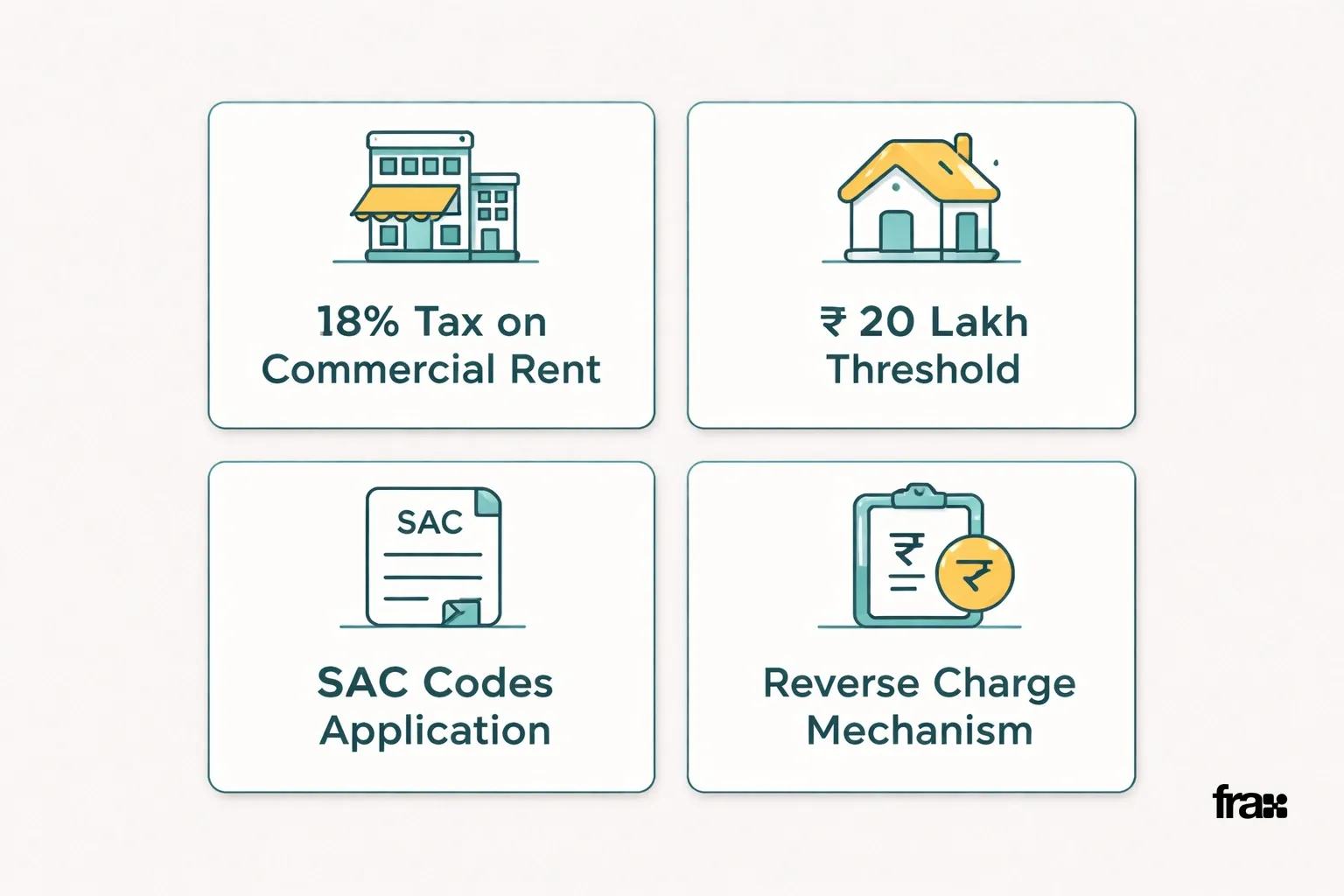
GST on rental income mostly affects commercial landlords. The rate is 18% once your total turnover crosses ₹20 lakh (or ₹10 lakh in special category states). Rent out a home for someone to live in? You're generally exempt. Rent out commercial space? You need SAC code 997212. If you're a business renting a residential unit, reverse charge applies you pay the tax, not the landlord.
The rules trip up a lot of people because residential and commercial properties are treated so differently. Miss a registration deadline or use the wrong code, and you're looking at penalties or lost input tax credit. This matters more now that fractional ownership brings regular investors into commercial leasing structures they haven't dealt with before.
GST on Rental Income: The Basics
This content is for informational purposes only and does not constitute financial, legal, or investment advice.
Renting out immovable property counts as a "supply of service" under the GST framework. That means standard rules registration, invoicing, filing returns apply once you cross the threshold. Many landlords assume rental income is exempt across the board, but that's only true for specific residential situations covered later here.
If you're evaluating commercial property as an asset class, it helps to understand the ownership structure first. Our guide on commercial real estate investment breaks it down.
Commercial vs Residential Rent: What Changes Under GST
This content is for informational purposes only and does not constitute financial, legal, or investment advice.
Commercial rent is taxed at 18% once you cross the threshold. Residential rent for personal use stays exempt. The distinction comes down to usage, not just the building type. A residential flat rented for a business office attracts GST.
Scenario | GST Treatment |
|---|---|
Residential property rented for personal living | Exempt |
Residential property rented to a registered business entity | Taxable under reverse charge |
Commercial property (office, shop, warehouse) rented out | Taxable at 18%, forward charge |
Commercial property rented to another GST-registered business | Taxable at 18%, forward charge |
Residential unit used as a guest house by a company | Taxable, since use is commercial |
Fractional ownership usually involves commercial assets like office floors or retail spaces. These fall into the taxable bracket once turnover crosses the limit. For a broader view of the structure, our fractional commercial property guide is a useful reference.
Understanding Rental Income and Registration
This content is for informational purposes only and does not constitute financial, legal, or investment advice.
When managing rental income, it is important to understand how registration thresholds work. Investors often look for clarity on which limits apply to their specific situation and how different types of income are categorized.
Understanding these thresholds helps investors plan their portfolios more effectively and ensures they are aware of the regulatory landscape surrounding real estate services.
HSN/SAC Code for Rental Income Explained
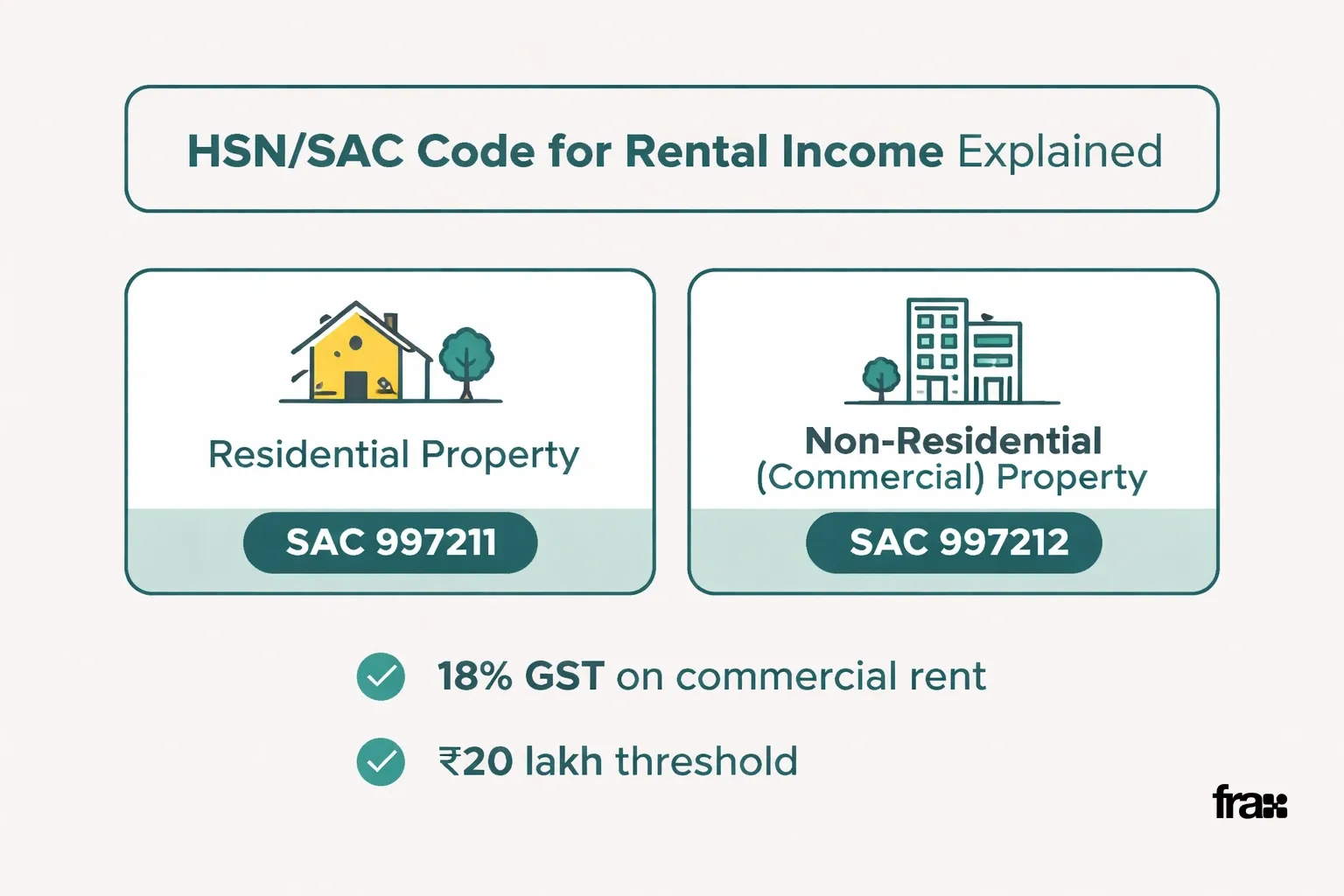
Technically, rental income uses an SAC code, not an HSN code, because renting is a service. The primary code is 9972 (real estate services broadly), with 997212 specifically for leasing non-residential (commercial) property.
Invoices often label the field "HSN/SAC" out of habit. Getting this right matters for return filing and for any input tax credit claims by the tenant.
Type of Rental Service | SAC Code |
|---|---|
Rental/leasing of residential property | 997211 |
Rental/leasing of non-residential (commercial) property | 997212 |
Real estate services on a fee or commission basis | 997221 |
Landlords issuing GST invoices for commercial rent should quote 997212. A wrong code can delay the tenant's credit and invite audit scrutiny.
This content is for informational purposes only and does not constitute financial, legal, or investment advice.
GST Rate on Commercial Rental Income: Worked Examples
This content is for informational purposes only and does not constitute financial, legal, or investment advice.
The GST rate on commercial rent is a flat 18% on the total rent charged. No slabs. The tax applies to the taxable value, usually the monthly or annual rent in the lease.
Let's look at the numbers:
Example 1: Below threshold
A landlord earns ₹1,40,000 per month from a commercial shop, totaling ₹16,80,000 annually. Below ₹20 lakh, GST registration isn't mandatory, and no GST is charged.
Example 2: Crosses threshold
Another landlord earns ₹2,00,000 per month, totaling ₹24,00,000 annually. This crosses ₹20 lakh, so registration is mandatory. GST at 18% adds ₹36,000 monthly, making the invoice ₹2,36,000.
Example 3: Multiple properties
A landlord owns two commercial units earning ₹10 lakh and ₹12 lakh annually. Combined turnover is ₹22 lakh, crossing the threshold even if each property individually looks small.
Example 4: Voluntary registration
A landlord earning ₹15 lakh annually registers voluntarily to pass input tax credit to a corporate tenant.
These examples show why tracking combined turnover matters more than looking at one lease in isolation.
Explore Commercial Property Investing with FraX
Understanding GST in Real Estate Rentals
This content is for informational purposes only and does not constitute financial, legal, or investment advice.
The application of GST on rental properties depends on the nature of the property and the registration status of the parties involved. Different rules apply depending on whether a property is used for residential or commercial purposes.
Understanding these distinctions is important for both landlords and tenants to ensure proper compliance with tax regulations.
Residential property rented to a registered business: Specific GST rules apply to the tenant.
Residential property rented to an unregistered individual for personal use: No GST is typically charged.
Commercial property rented to anyone: The landlord generally collects and remits GST if they are registered.
Commercial property rented by an unregistered landlord: No GST is charged, as registration determines liability.
Landlords should specify in the lease who the tenant is and how the property will be used, as these factors influence the tax treatment.
GST Registration Process for Landlords
This content is for informational purposes only and does not constitute financial, legal, or investment advice.
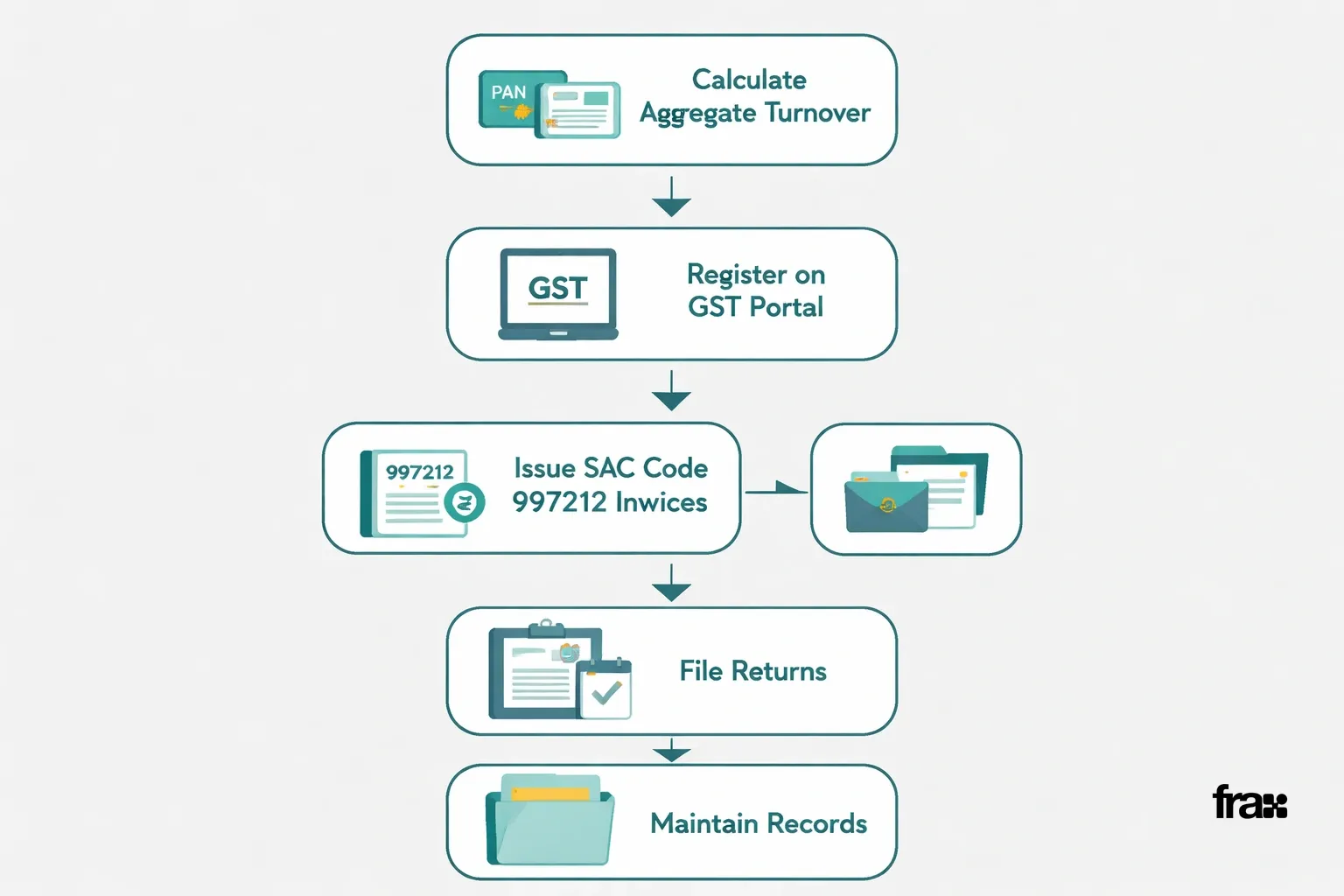
GST registration for rental income uses the standard portal process: PAN, address proof, and lease details. It becomes mandatory once aggregate turnover crosses ₹20 lakh.
The steps:
Calculate aggregate turnover across all rented properties and taxable services under the same PAN.
Register on the GST portal once the threshold is crossed.
Issue GST-compliant invoices with SAC code 997212 for commercial rent.
File monthly or quarterly returns, plus annual returns.
Keep records of lease agreements, rent receipts, and tenant GST numbers for six years.
Skipping registration after crossing the threshold risks interest, late fees, and penalties. Since rules shift, verify current rates and limits with a qualified professional before filing.
How GST Works for Fractional Owners' Rental Payouts
This content is for informational purposes only and does not constitute financial, legal, or investment advice.
Fractional ownership structures hold commercial property through a dedicated LLP. The LLP receives rent from tenants and may need GST registration if turnover crosses the limit. Investors receive income as a distribution from the LLP, not as direct rent.
At FraX, each property sits inside its own dedicated LLP SPV: one property, one LLP. This contains rental income, expenses, and GST compliance at the LLP level. Investors hold direct beneficial partnership interests in these LLPs, not direct individual property titles.
Tax treatment at the investor level depends on individual circumstances and is still evolving across the industry. This section avoids prescribing specific outcomes. If the underlying asset generates rent crossing GST thresholds, the LLP handles registration and invoicing, separate from investor distributions.
For more on how FraX structures investor protection, see how FraX safeguards investor money at every stage.
Start Building Your Fractional Real Estate Portfolio
Common Mistakes Landlords Make with GST on Rent
The biggest error? Confusing the ₹40 lakh goods threshold with the ₹20 lakh services threshold that applies to rent. This single mistake leads to late registration and accumulated penalties when caught during assessment.
Other frequent slip-ups:
Charging GST on residential rent used purely for personal living no GST applies.
Mixing up SAC codes 997211 (residential) and 997212 (commercial).
Ignoring combined turnover from multiple properties, assuming each lease is assessed separately.
Overlooking RCM when leasing a residential unit to a registered business tenant.
Leaving lease agreements vague on whether rent is GST-inclusive or GST-exclusive.
Getting these details right protects landlords and tenants from notices, interest, and denied credit claims.
If you're weighing how rental yield fits into fractional returns, fractional real estate returns breaks down the split. We've also compared REIT investment options in India. For terminology, the fractional real estate glossary helps. First-time investors can start with the step-by-step guide. For the full picture, read the guide to fractional commercial property investment. On risk, the smart investor's guide to risk and reward is useful. Visit getfrax.com or use the contact page for queries.
Past performance and XIRR figures are historical and do not guarantee future returns. This content is for information only and does not constitute financial, legal, or investment advice.
Frequently Asked Questions
Q: Does GST apply to residential rental income in India?
A: Not when rented for personal living. It applies under reverse charge if rented to a GST-registered business.
Q: What is the GST rate on commercial rental income?
A: 18% flat, applied to total rent once the landlord crosses the registration threshold.
Q: Is the GST registration threshold for rent ₹20 lakh or ₹40 lakh?
A: ₹20 lakh for most states, ₹10 lakh for special category states. The ₹40 lakh limit is for goods, not rent.
Q: What is the correct HSN or SAC code for rental income?
A: SAC code 9972. Use 997212 for commercial property, 997211 for residential.
Q: Who pays GST under reverse charge on residential rent?
A: The tenant pays directly to the government if they're a GST-registered business.
Q: How does GST affect rental payouts from fractional real estate investments?
A: The LLP SPV handles GST if turnover crosses the threshold. Investor distributions are separate. Check with a tax professional.
Learn more
Discover more from the latest posts.