
REITs in India 2026: Investment Options Explained
Explore 2026 Indian REITs: direct, mutual fund, or fractional ownership. Compare yields, liquidity & control in commercial real estate.
This content is for informational purposes only and does not constitute financial, legal, or investment advice. If you're looking at REITs in India in 2026, you basically have three choices. You can open a demat account and buy listed REIT units directly. You can invest through a REIT mutual fund or fund of funds like the Kotak International REIT FOF. Or, you can skip the pooled trust entirely and go for fractional ownership of a single property. Each path has its own quirks when it comes to liquidity, how much control you actually have, and the yield you can expect to pocket.
REITs have gone from a somewhat niche instrument to a mainstream portfolio tool since they debuted on Indian exchanges in 2019. Still, I find a lot of investors hesitate simply because the mechanics feel unfamiliar. Let's walk through how to actually set this up, how to pick a fund, and what realistic dividend yields look like for 2026. We'll also compare REITs with fractional real estate ownership, in case you'd rather own a specific asset than a slice of a diversified trust.
What Is a REIT and Why It Matters in October 2026
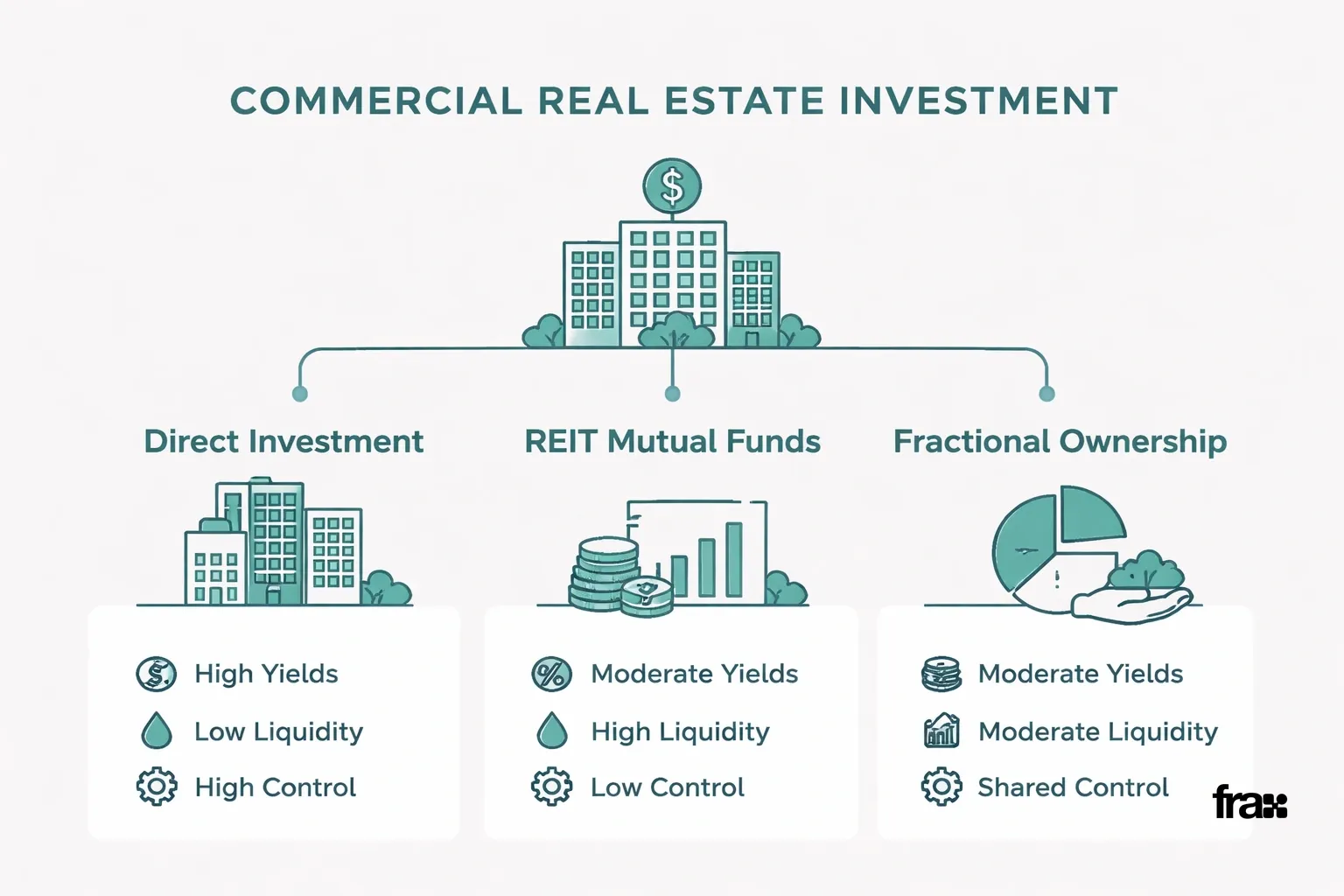
A REIT (Real Estate Investment Trust) pools investor money to own income-generating commercial property, usually things like office parks and malls. Listed Indian REITs like Embassy Office Parks, Mindspace Business Parks, and Brookfield India trade on the NSE and BSE just like regular company shares. By October 2026, we're looking at four listed REITs plus several REIT mutual funds, giving Indian investors multiple ways to get into commercial real estate without having to buy an entire building.
The appeal is pretty straightforward. REITs turn illiquid office towers into units you can actually trade, and rules force these trusts to distribute income to unit holders regularly. That setup has made them popular for people who want exposure to Grade-A commercial real estate but don't have the massive capital or the stomach for the headaches of direct ownership. If you want a deeper dive on how this asset class stacks up against other options, the REIT investing guide for commercial real estate in India is a good read.
This content is for informational purposes only and does not constitute financial, legal, or investment advice.
Step 1: Open a Demat Account to Buy Listed REITs
You need a demat account to buy listed REIT units in India. They trade on stock exchanges exactly like equity shares, so if you already have a trading and demat account with a registered broker, you can place a REIT order instantly. No special REIT paperwork is required.
Getting this done is fairly simple once your account is live. You complete standard KYC with a registered broker if you don't have an account yet. Then you just transfer funds into your trading account, search for the REIT by its exchange ticker (like EMBASSY or MINDSPACE), and place a buy order during market hours just like you would for any stock. The units get credited to your demat account within the standard settlement cycle.
One thing worth noting: The minimum lot size for listed REITs was reduced back in 2021. This made it a lot easier for retail investors to buy smaller quantities. It widened access quite a bit, though unit prices still fluctuate with market sentiment and interest rate movements, just like any exchange-traded instrument.
This content is for informational purposes only and does not constitute financial, legal, or investment advice.
Step 2: Decide Between Direct REIT Units and REIT Mutual Funds or FoFs
This content is for informational purposes only and does not constitute financial, legal, or investment advice.
REIT mutual funds and funds of funds let you buy diversified REIT exposure through a single mutual fund unit, meaning you don't have to pick individual trusts yourself. The Kotak International REIT FOF, for instance, invests in global REITs, including those listed in Singapore and the US. This offers Indian investors international diversification through a rupee-denominated fund. If you prefer professional selection over direct stock-picking, this route makes sense.
There are some real differences between buying REIT mutual funds and picking listed units directly. If you buy direct REIT units, you choose the specific trust, say, Brookfield India or Embassy, and trade it on the exchange at market price. If you go with a REIT mutual fund or FoF, a fund house like Kotak pools money across multiple REITs, domestic or international, inside one NAV-based scheme. Mutual funds also usually allow systematic monthly investment (SIP), which you can't do with direct exchange-traded REIT units.
The trade-off is cost and currency. Funds of funds like the Kotak International REIT FOF carry an added layer of expense ratio because they invest in other REIT funds, not the property trusts directly. International REIT FoFs also add currency risk on top of property market risk, since the underlying assets sit in foreign markets. Weigh the convenience against the control you're giving up before jumping into a fund-based route.
Explore Fractional Real Estate as a REIT Alternative
Step 3: Set Realistic Expectations on REIT Dividend Yield
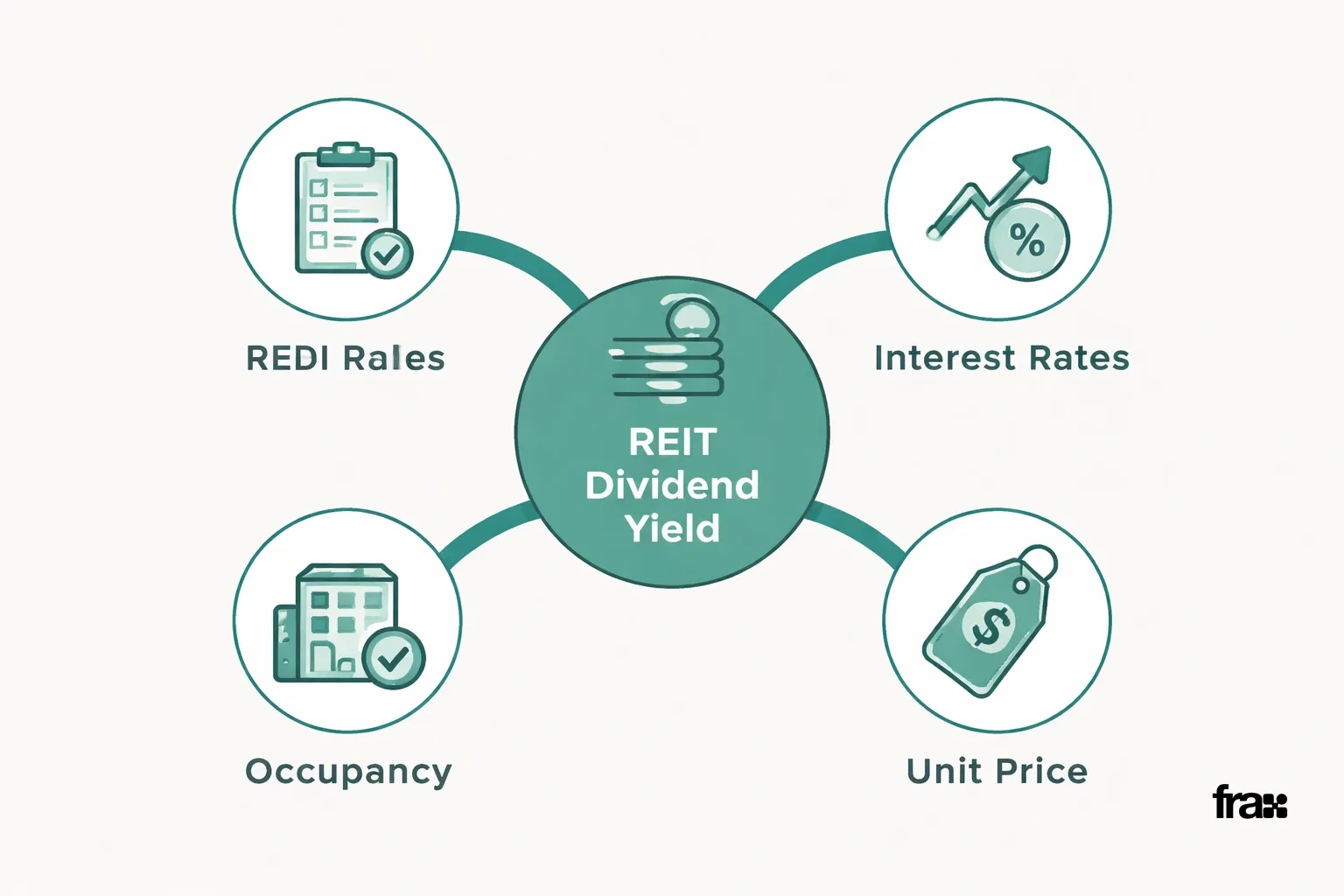
REIT dividend yield in India hinges heavily on mandatory distribution rules and the underlying office rental income. Regulations require REITs to distribute at least 90% of net distributable cash flow to unit holders, which is typically paid out quarterly. The actual yield levels will move around depending on the unit price, prevailing interest rates, and occupancy across the trust's commercial property portfolio.
Several factors push REIT dividend yield up or down over time. If interest rates fall, that generally supports REIT unit prices, which can compress yield as a percentage of price. High occupancy across office parks supports stable rental income and distribution consistency. Built-in rent increases in long-term leases gradually lift distributable income. Units trading below net asset value may show a higher running yield, and vice versa. Also, payouts can include a mix of dividend, interest, and capital return components, each handled differently in your cash flow.
Just remember that past performance and realized XIRR figures are historical. They don't guarantee future property returns or rental yields. Treat historical numbers as context, not a forecast, especially since commercial real estate cycles shift right along with India's broader economic growth and real estate trends.
This content is for informational purposes only and does not constitute financial, legal, or investment advice.
REIT vs Fractional Real Estate Ownership: Which Fits You
This content is for informational purposes only and does not constitute financial, legal, or investment advice.
REITs and fractional real estate ownership both lower the barrier to commercial property, but they differ in what you actually own. REIT investors hold units in a diversified trust managing multiple buildings. Fractional ownership platforms let you choose one specific property instead. The right fit depends on whether you want broad diversification or asset-level choice.
Factor | Listed REITs / REIT Mutual Funds | Fractional Real Estate |
|---|---|---|
Minimum investment | Price of one unit, varies with market | Starts at ₹10,000 |
Asset selection | Diversified trust portfolio, no say in individual buildings | Investor picks a specific property |
Liquidity | Exchange-traded for listed REITs, NAV-based for funds | Buy and sell anytime, no lock-in period |
Ownership structure | Units in a trust | Beneficial interest in a dedicated LLP SPV per property |
Fund oversight | Trust manager and regulatory framework | ICICI Bank escrow, overseen by Universal Trustees |
Income source | Mandatory quarterly distributions | Rental income distribution alongside potential appreciation |
Transparency on single asset | Low, decisions rest with trust management | Higher, since each property sits in its own LLP |
This is exactly the comparison we explore in more depth over at which is the best way to invest in real estate: comparing fractional, REITs, and direct ownership. It's worth a read before you commit capital to either route, since both have a place depending on what you're trying to do.
When you choose the fractional route, you hold direct beneficial partnership interests in dedicated LLP SPVs, not direct individual property titles. That structural difference is central to understanding what fractional ownership actually offers compared to holding REIT units.
Step 4: Track, Hold, and Rebalance Your REIT Portfolio
Tracking a REIT portfolio means keeping an eye on distribution announcements, occupancy updates, and unit price movements over time. Your primary sources of information will be the quarterly distribution reports and annual portfolio updates published by each trust. Honestly, you should treat REITs as a long-horizon holding rather than a short-term trading instrument.
A practical routine looks like this: review the quarterly distribution per unit announcements from each REIT you hold. Check occupancy and leasing updates in investor presentations, which usually come out alongside results. Compare your REIT allocation against other real estate exposure, including fractional real estate investments, so you don't accidentally overweight one structure. Rebalance periodically if REIT unit prices swing significantly against your target allocation. Diversifying across structures, not just across properties, often reduces portfolio volatility. A broader look at this idea is covered in portfolio stability and how fractional real estate reduces volatility.
This content is for informational purposes only and does not constitute financial, legal, or investment advice.
Who Should Consider Fractional Ownership Instead

Fractional real estate ownership is for investors who want control over which specific property they back, rather than just buying into a diversified trust. Platforms like FraX let you start with ₹10,000 per property. You choose from commercial assets and exit through a buy-and-sell model without a fixed lock-in. This appeals especially to younger, working professionals earning ₹15 to ₹20 lakh who find both direct property purchase and large REIT allocations out of reach.
FraX structures each property as a dedicated LLP SPV, where investors hold direct beneficial partnership interests in dedicated LLP SPVs, not direct individual property titles. Transactions are routed through an ICICI Bank escrow account overseen by Universal Trustees as an independent trustee. That setup adds a layer of structural oversight around fund movement. If you're new to this format, the fractional real estate investment glossary and a beginner's step-by-step guide to your first fractional investment are good starting points before committing capital.
If you're weighing returns across both formats, you might also want to read how fractional real estate returns stack up through appreciation and rental yield, and how FraX safeguards investor money at every transaction stage.
This content is for informational purposes only and does not constitute financial, legal, or investment advice.
Start Building Real Estate Wealth with ₹10,000
Getting Started the Right Way
Choosing between a demat-based REIT purchase, a REIT mutual fund, or fractional ownership really just comes down to how much control you want over the underlying asset. REITs offer diversification and exchange liquidity, but you get no say in individual buildings. Fractional platforms offer asset-level choice with a buy-and-sell model instead of exchange trading. Many investors end up using both, treating REITs as broad commercial exposure and fractional ownership as a way to back specific properties they actually understand.
Before acting on either path, read through the broader commercial real estate landscape in India and Browse the FraX blog for ongoing updates on market conditions through the rest of 2026.
This content is for informational purposes only and does not constitute financial, legal, or investment advice.
Frequently Asked Questions
This content is for informational purposes only and does not constitute financial, legal, or investment advice.
Q: Do I need a separate demat account to invest in REIT mutual funds? A: No. REIT mutual funds and funds of funds, including structures like the Kotak International REIT FOF, are purchased like any other mutual fund through a fund house or distributor. You only need a demat account if you're buying listed REIT units directly on the exchange.
Q: What is a typical REIT dividend yield in India? A: REIT dividend yield varies with unit price, interest rates, and occupancy. Regulations require at least 90% of net distributable cash flow to be paid out. Past distribution levels are historical and don't guarantee future yield, so always check each trust's latest quarterly disclosure.
Q: Is the Kotak REIT Fund the same as buying a listed REIT directly? A: No. A Kotak REIT fund structure, such as a fund of funds, invests in REIT units on your behalf and adds its own expense ratio layer. Buying a listed REIT directly through a demat account means you hold the units yourself without that extra fund management layer.
Q: How does fractional real estate ownership differ from owning REIT units? A: REIT units represent a share in a diversified trust managing multiple buildings. Fractional ownership through platforms like FraX gives you a beneficial interest in a dedicated LLP SPV tied to one specific property, not a trust-wide stake. Investors hold direct beneficial partnership interests in dedicated LLP SPVs, not direct individual property titles.
Q: Can I exit a fractional real estate investment as easily as selling a listed REIT? A: Fractional platforms like FraX offer a buy-and-sell model without a fixed lock-in period. This differs from the trading available for listed REITs. You should always review exit timing and liquidity mechanics directly on the platform before investing.
Q: Which option suits a ₹15-20 lakh salary investor better, REITs or fractional ownership? A: Both can fit into a diversified strategy depending on your goals. REITs suit investors wanting broad, exchange-traded commercial exposure, while fractional ownership suits those wanting to choose a specific property starting at ₹10,000.
Learn more
Discover more from the latest posts.