
Fractional Real Estate Investing in India: How It Works
Fractional ownership lets investors fund Indian properties from ₹10,000, sharing returns proportionally. Learn how it works and who benefits.
Fractional ownership real estate in India lets multiple investors jointly fund a single premium property. You put money into a legal structure usually a dedicated LLP and share the returns proportionally. Instead of needing crores to buy a whole building, you can start with ₹10,000.
Real estate has always been India's favourite asset class. The problem? Most salaried professionals could never actually afford it. Fractional ownership fixes that by splitting high-value properties into affordable units. Here is how the model works, who it fits, and what you should check before putting money in.
What Is Fractional Ownership in Real Estate?
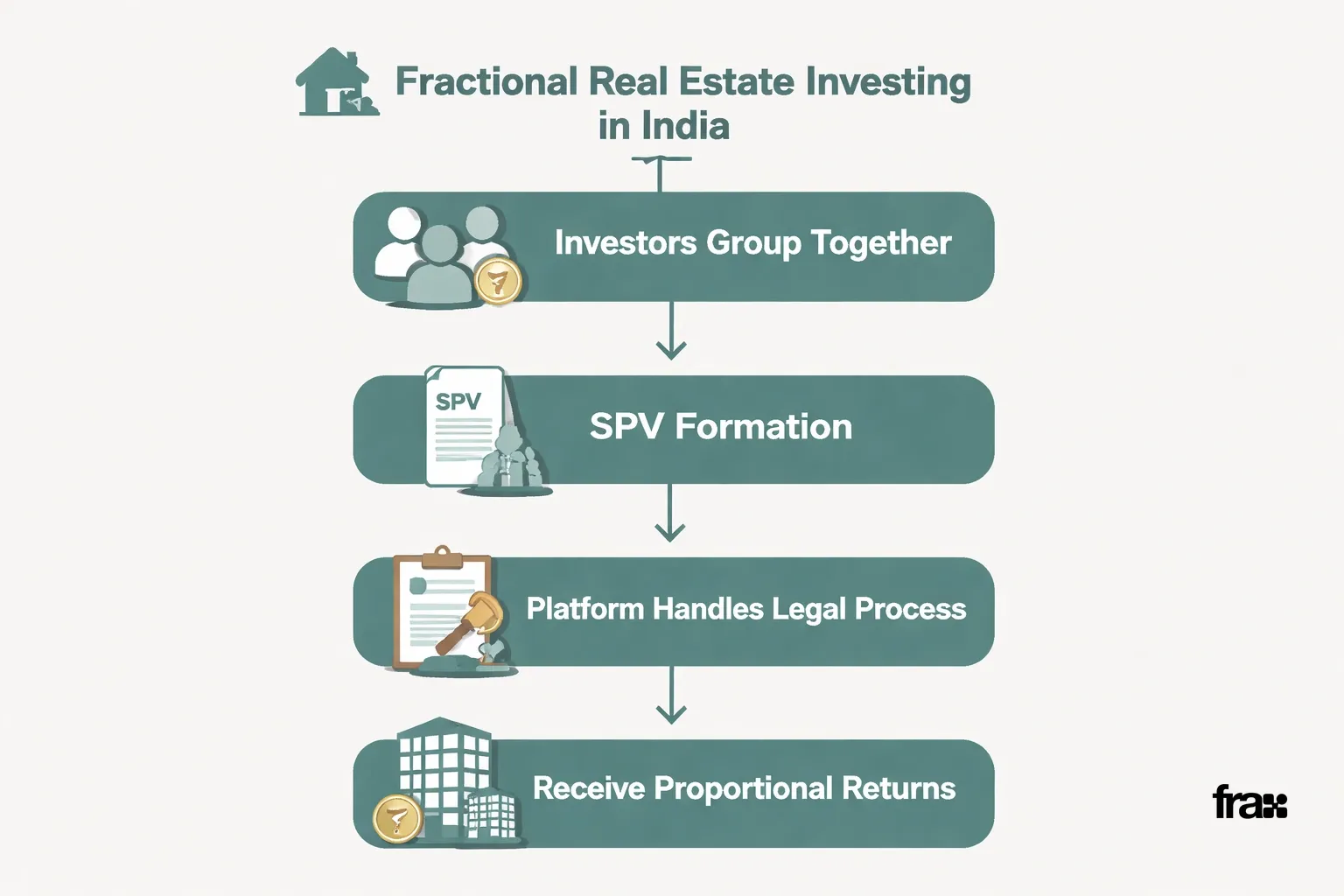
It is exactly what it sounds like: a group of investors buys a property together. Each person holds a proportional stake, usually through a Special Purpose Vehicle (SPV). When rent comes in or the property gains value, you get your share.
Families and business partners have done this informally for decades. The difference in 2026 is that the entire process is digitized. Platforms now handle the legal structuring, paperwork, and transactions online. You don't need a broker or a personal network to get involved. For a deeper look, see our page on fractional real estate investing in India.
This content is for informational purposes only and does not constitute financial, legal, or investment advice.
How Fractional Real Estate Investing Works in India
The mechanics are straightforward. Investors pool capital into a legal entity that holds the asset. At FraX, that entity is a dedicated LLP one property equals one LLP. You become a beneficial partner in that LLP, and your returns depend on how much you put in.
The process usually goes like this:
We identify and vet a premium property (commercial or residential).
A dedicated LLP SPV is created to hold that specific asset.
You buy units in the LLP (starting at ₹10,000).
Funds move through an ICICI Bank escrow account, with Universal Trustees watching over the process.
Legal docs record your proportional interest.
You can monitor performance and exit digitally without rigid lock-ins.
Compare that to traditional buying. No endless paperwork, registration headaches, or broker fees. For a walkthrough of the signup process, check our step-by-step beginner's guide.
Start Your Fractional Real Estate Journey with ₹10,000
Why Fractional Ownership Is Gaining Momentum in 2026
Two reasons: capital and liquidity. Young professionals earning ₹15-20 lakh a year rarely have crores sitting around, but they still want exposure to premium assets. Fractional models offer a way in.
A few things are happening at once. Urban real estate prices in top metros keep climbing, locking more people out of direct ownership. Meanwhile, fintech-style platforms have made KYC and onboarding instant. There is also a demographic shift: reports suggest a large chunk of fractional investors are under 35.
This mirrors a broader trend we wrote about: how Gen Z is making real estate the coolest asset class again. They treat property like mutual funds: a portfolio item, not a lifetime commitment.
Diversification plays a role too. Instead of dumping all your savings into one flat, you can spread ₹50,000 or ₹1 lakh across multiple properties in different cities. Our guide on the top cities for fractional real estate investment breaks down where that strategy works best.
This content is for informational purposes only and does not constitute financial, legal, or investment advice.
Fractional Ownership vs REITs vs Direct Ownership
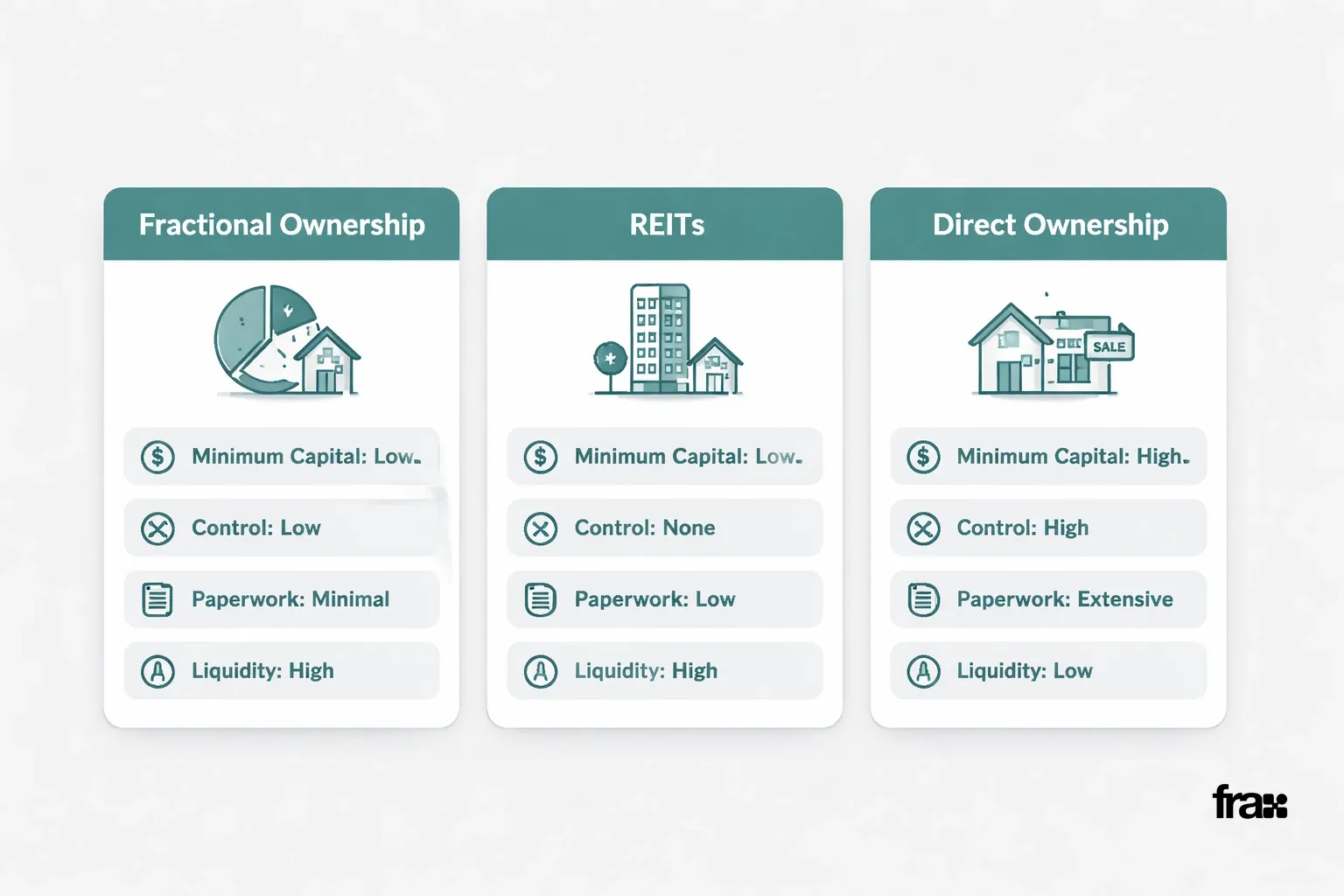
How does this stack up against REITs or just buying a flat yourself? REITs are pooled trusts traded on exchanges. Direct ownership means buying the whole property. Fractional sits in the middle: specific asset exposure without the full capital outlay. This content is for informational purposes only and does not constitute financial, legal, or investment advice.
Factor | Direct Ownership | REITs | Fractional Ownership |
|---|---|---|---|
Minimum capital | Several crores | Market-linked unit price | From ₹10,000 |
Control over specific asset | Full | None (pooled portfolio) | Proportional, specific property |
Paperwork burden | High | Low | Low (platform-managed) |
Liquidity structure | Low (slow resale) | Exchange-based | Digital buy/sell listing |
Legal holding | Individual title | Trust units | Beneficial interest in LLP SPV |
Investors hold direct beneficial partnership interests in dedicated LLP SPVs, not direct individual property titles.
Each has its place. If you want the full comparison, read our piece on choosing between fractional, REITs, and direct ownership. If REITs are more your speed, our REIT investing guide has the details.
Legal & Security Structure Behind Fractional Real Estate
This content is for informational purposes only and does not constitute financial, legal, or investment advice.
Platforms layer legal and financial safeguards to protect your capital. At FraX, every property sits in its own LLP. This keeps assets legally separated. If one property underperforms, it does not mess up the capital tied to another.
Transactions flow through an ICICI Bank escrow account monitored by Universal Trustees. They act as an independent third party, adding oversight beyond the platform itself.
One key distinction: Investors hold direct beneficial partnership interests in dedicated LLP SPVs, not direct individual property titles. That changes how exits and legal rights work. If you want the full breakdown on safety measures, our article on how FraX safeguards investor money covers it. We also have a fractional real estate glossary if the jargon gets thick.
Who Should Consider Fractional Real Estate Investing?
This content is for informational purposes only and does not constitute financial, legal, or investment advice.
It works well for people who want property exposure without draining their liquidity. If you are a salaried professional earning ₹15-20 lakh annually and traditional real estate feels impossible, this is for you. It also suits anyone looking to diversify beyond stocks and fixed deposits.
Typical profiles include:
Young professionals in late twenties/early thirties building a first portfolio.
Investors who already own a home but want exposure in other cities.
NRIs who want a structured, digital route into Indian real estate.
People who want to split savings across commercial and residential assets.
We broke down five ways this changes the game for young investors here. NRI investors should check our guide on exit, risk, and NRI specifics.
Explore Fractional Property Opportunities on FraX
Risks and Realistic Expectations
This content is for informational purposes only and does not constitute financial, legal, or investment advice.
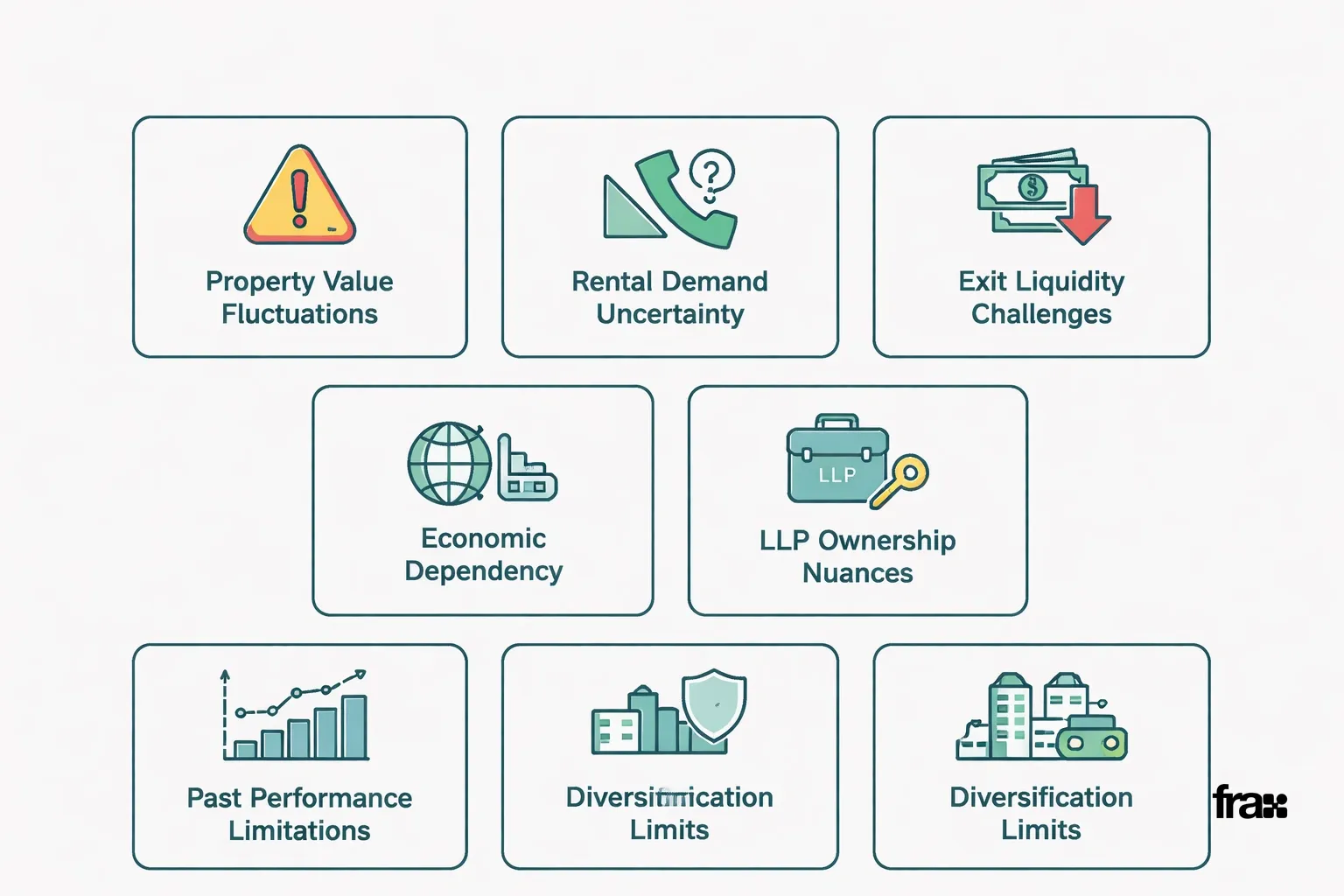
Property values can fall. Rental demand can drop. Exits depend on finding a buyer, not clicking a "sell" button on a stock exchange. Fractional real estate has risk don't let anyone tell you otherwise.
Keep this in mind:
Returns depend on location, asset type, and the economy.
Liquidity via digital listings is not the same as instant stock trading.
Investors hold direct beneficial partnership interests in dedicated LLP SPVs, not direct individual property titles.
Past performance and realized XIRR figures are historical and do not guarantee future property returns or rental yields.
Diversification helps manage volatility, but it doesn't erase it. We wrote about portfolio stability here. For the risks alongside the rewards, our smart investor's guide to risk and reward is a solid read.
How to Get Started with Fractional Real Estate Investing
This content is for informational purposes only and does not constitute financial, legal, or investment advice.
Pick a platform, do your KYC, and choose a property. It usually takes a few minutes online. FraX lets you start at ₹10,000.
Quick checklist:
Decide how much you want to invest and for how long.
Browse properties. Look at location, asset type, and past data.
Complete KYC and transfer funds to the escrow account.
Start small, then spread out across cities/properties over time.
Track holdings via the app and check exit options when needed.
FraX has deployed over ₹3 crore across properties. We have 40,000+ app downloads and a 4.8-star rating. The company (FraX Digital Private Limited) was founded in November 2025 by Prabhav Tanay and Tushar Chaudhary (IIT-BHU alumni). Fees are simple: 1% on buying, 1% on selling. No hidden structures.
The Future of Fractional Ownership in India
Fractional ownership is shifting from niche idea to mainstream wealth tool. As more salaried professionals look for alternatives to standard savings options, demand for accessible real estate exposure will likely grow.
Commercial real estate is a particularly hot category. Our guide on fractional commercial property investment explains why offices and retail spaces are drawing interest. Expect better regulation, more cities, and greater transparency as the sector matures.
If you are watching this globally, our piece on why fractional real estate went global puts India's growth in context. The big picture: real estate is becoming a flexible line item in a portfolio, not a one-time, all-in bet.
This content is for informational purposes only and does not constitute financial, legal, or investment advice.
Frequently Asked Questions
What is the minimum amount needed to start? You can start with ₹10,000 on FraX. That is a tiny fraction of what direct property purchase usually demands.
Do I get a physical title deed? No. You hold direct beneficial partnership interests in dedicated LLP SPVs. It is a distinct legal structure you do not get a physical title deed for the property itself.
How is my money protected? Funds go through an ICICI Bank escrow account managed by Universal Trustees. Each property is held in its own LLP to keep assets legally separate.
Can I sell whenever I want? FraX allows you to list your holdings for sale digitally without rigid lock-ins. However, this is not the same as instant stock-exchange liquidity. You need a buyer on the platform.
Is this the same as a REIT? No. REITs are pooled trusts traded on exchanges. Fractional ownership gives you proportional beneficial interest in a specific property via a dedicated LLP.
Who is doing this? Mostly salaried professionals earning ₹15-20 lakh annually. Many are under 35, looking to diversify without locking up crores in a single asset.
Learn more
Discover more from the latest posts.