

Tax Implications of Fractional Real Estate via LLP SPV
Learn how fractional real estate income via LLP SPVs is taxed in India-rent, interest, and profit‑share tax rules for investors.
If you're looking at fractional real estate platforms, you've probably seen the headline yields. Understanding the structure behind these returns is essential for any investor.
In India, fractional income usually flows through an LLP structure. Investors hold direct beneficial partnership interests in dedicated LLP SPVs, not direct individual property titles. This structure defines how returns are distributed and managed.
This content is for informational purposes only and does not constitute financial, legal, or investment advice.
How income reaches you in an LLP SPV structure
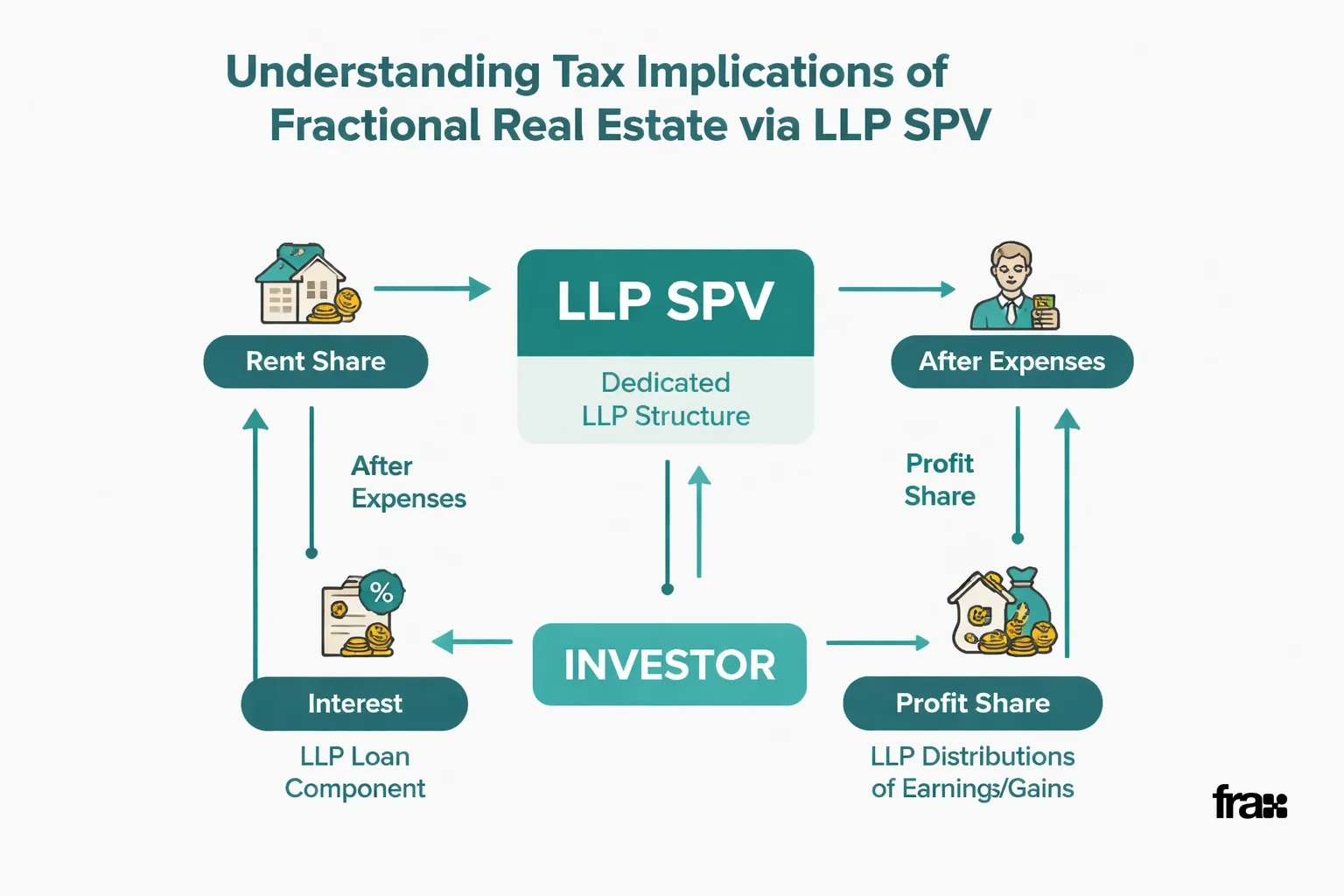
A platform using an LLP SPV doesn't just hand you rent. It routes money through a few channels. Rent from the tenant becomes a rent share after the LLP deducts operating expenses. Interest accrues on the loan component you extend to the LLP. Profit share happens if the LLP distributes retained earnings or property gains. The mix depends entirely on how a platform structures its legal docs.
Understanding this underlying entity matters before you compare returns. Some platforms, including FraX, structure every property as a dedicated LLP SPV. They split your commitment into a small capital contribution plus a loan to the LLP. You can read about SPVs in real estate for more context. That capital-versus-loan split is why rent and interest payouts behave differently compared to holding an undivided share in a flat. Our guide on fractional real estate ownership covers the mechanics in more depth.
This content is for informational purposes only and does not constitute financial, legal, or investment advice.
Investors hold direct beneficial partnership interests in dedicated LLP SPVs, not direct individual property titles.
Past performance and realized XIRR figures are historical and do not guarantee future property returns or rental yields.
Understanding Payout Structures
This content is for informational purposes only and does not constitute financial, legal, or investment advice.
When investing through FraX, payouts are structured based on the underlying asset and the legal framework of the investment vehicle. The way these returns are categorized depends on the specific structure of the partnership and the nature of the distribution.
Investors should review their specific investment documents to understand how different payout channels are classified. Because tax laws are complex and subject to change, it is essential to consult with a qualified tax professional to determine how your specific returns should be reported.
The actual classification of your returns depends on the partnership deed, how the platform structures the capital-versus-loan split, and whether you are treated as a partner or a lender. Always confirm the specific treatment with a qualified tax adviser before filing.
Investment Structure
FraX utilizes a dedicated LLP SPV structure for each property investment. Investors hold direct beneficial partnership interests in dedicated LLP SPVs, not direct individual property titles.
This structure allows for a low barrier to entry, starting at ₹10,000, while ensuring that investments are backed by proper legal documentation and managed through ICICI Bank escrow mechanisms. For more information on different investment vehicles, you can explore our guides on REITs and InvITs, Embassy REIT dividends versus fractional yields, and our REIT investment options guide.
This content is for informational purposes only and does not constitute financial, legal, or investment advice.
See how an LLP SPV investment is structured
Capital gains when a fractional share is sold
Capital gains on a fractional real estate exit are determined by the holding period and the classification of the underlying asset under applicable laws. The treatment of these gains depends on whether the asset is categorized as a short-term or long-term holding based on the duration of the investment.
Because the precise classification of an LLP partnership interest can vary, it is important to consult with a professional tax adviser before filing your returns to understand the specific rates and benefits applicable to your situation. This content is for informational purposes only and does not constitute financial, legal, or investment advice. Investors hold direct beneficial partnership interests in dedicated LLP SPVs, not direct individual property titles. Past performance and realized XIRR figures are historical and do not guarantee future property returns or rental yields.
If you're comparing how different cities affect exit timelines and liquidity, our guide on top cities for fractional real estate investment is a useful next read, as is our broader beginner's guide to fractional real estate across Indian cities.
Fractional LLP ownership versus a direct flat and listed REITs

If you are trying to decide between buying a flat, going fractional, or buying REIT units, the structural profile for each is distinct. Each model offers a different approach to entry, liquidity, and ownership documentation.
Feature | Direct flat ownership | Fractional LLP structure | Listed REIT |
|---|---|---|---|
Entry ticket | Typically crores | From ₹10,000 | Market price of units |
Liquidity | Low, needs a buyer | Platform-dependent, buy and sell model | Exchange-traded |
Documentation | Sale deed, title | LLP partnership interest | Demat unit holding |
Each model suits a different investor profile. Our piece on smart ownership versus fractional real estate breaks down the structural trade-offs, including control and documentation.
This content is for informational purposes only and does not constitute financial, legal, or investment advice. Investors hold direct beneficial partnership interests in dedicated LLP SPVs, not direct individual property titles.
Tax Considerations for Investors
Investors, including NRIs, should be aware that tax obligations and TDS (Tax Deducted at Source) requirements vary based on residency status and payout types. It is important to understand how these factors may impact your net returns.
This content is for informational purposes only and does not constitute financial, legal, or investment advice.
Investors should consider the following when managing their portfolios:
Reviewing the applicable TDS rates for their specific residency status before remittance.
Checking if any tax treaties or residency certificates are required to manage tax liabilities across different jurisdictions.
Ensuring all necessary documentation is provided to the platform for the smooth remittance of proceeds.
Verifying that the LLP's details appear correctly on any issued tax certificates.
Since tax regulations and treaty applications vary by country and platform structure, investors should confirm specifics with a qualified tax adviser before filing returns in any jurisdiction.
Records and documents to keep for filing
Don't wait until filing season to figure out what you owe. Keep the LLP's annual investor statement, which should break down rent share, interest, and profit share separately. Retain any TDS certificates, Form 16A where applicable, and the escrow bank statements showing fund movement. If you exit an investment, keep the transfer agreement and the capital account closing statement. You'll need these to support your capital gains computation.
Start exploring fractional property investments
A few structural points to keep in mind. Investors hold direct beneficial partnership interests in dedicated LLP SPVs, not direct individual property titles. Past performance and realized XIRR figures are historical and do not guarantee future property returns or rental yields.
If you're building a broader strategy around fractional investing, our roundup of real estate investing tips for Indian investors and our guide on passive income through real estate are useful companion reads. For the full picture on exits, risk, and NRI considerations specifically, see our fractional real estate exit and NRI guide.
This content is for informational purposes only and does not constitute financial, legal, or investment advice.
Frequently Asked Questions
Q: Are LLP payouts tax-free for fractional real estate investors?
A: No. Tax treatment varies based on the type of income received and your individual tax slab. You should consult a tax professional to understand how these payouts are treated under current laws.
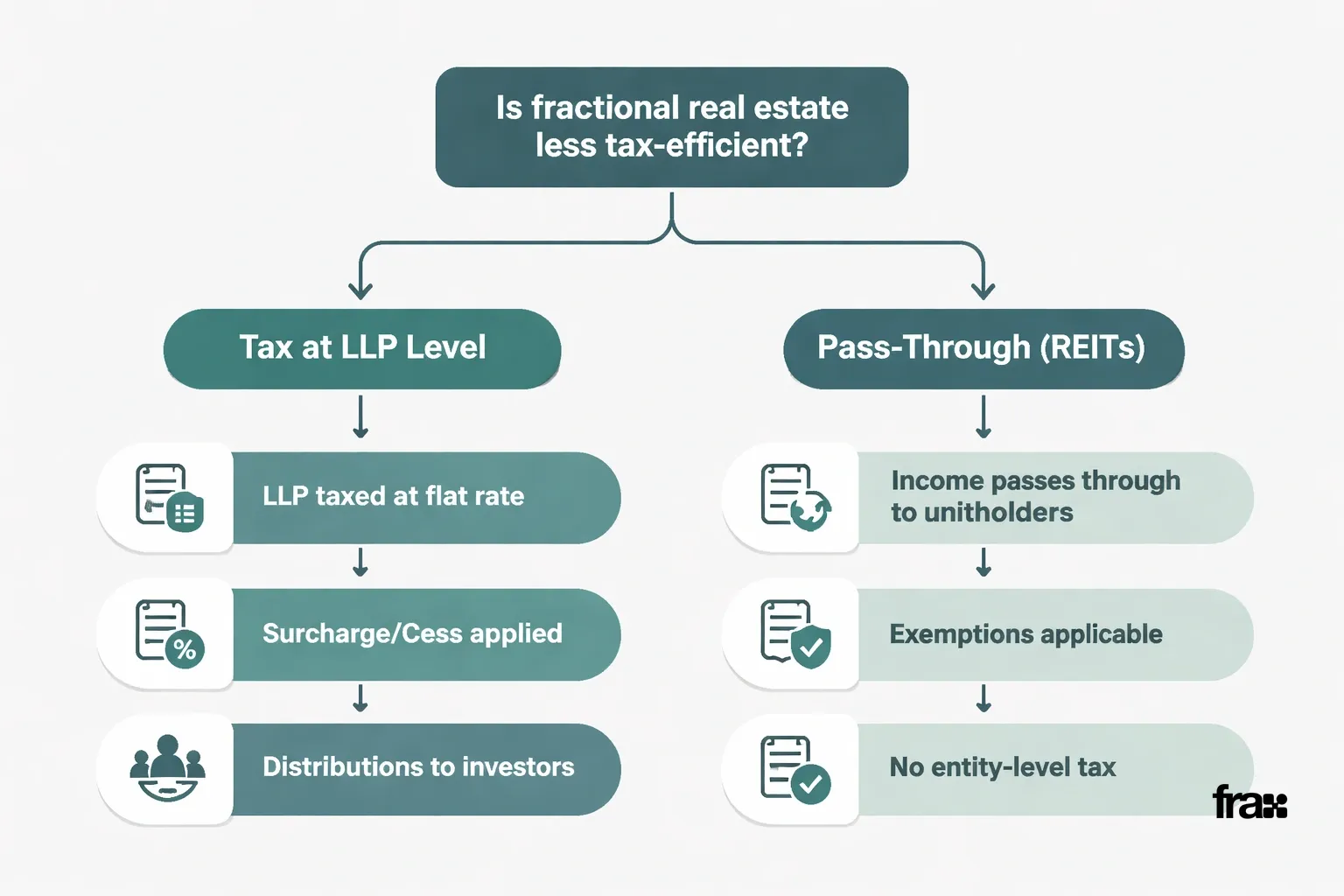
Q: Is fractional real estate less tax-efficient than listed REITs?
A: Tax efficiency depends on the specific structure of the investment and the nature of the returns. We recommend speaking with a qualified tax adviser to compare different investment vehicles.
Q: Do I get long-term capital gains if I sell my fractional share after 4 to 5 years?
A: Capital gains treatment depends on the holding period and the classification of the asset. Please confirm the specific rates and indexation treatment with a tax professional before filing.
Q: How is an LLP SPV different from owning a flat directly for tax purposes?
A: The tax treatment for direct property ownership differs from that of a partnership interest in an LLP. The specific implications for your tax return will depend on the legal structure of the investment.
Q: What should NRIs check before investing in fractional real estate?
A: NRIs should verify the applicable TDS rates, the relevance of Double Taxation Avoidance Agreements, and the necessary documentation for remitting funds. These requirements vary by jurisdiction.
Q: What documents should I keep for filing taxes on fractional real estate income?
A: Keep the LLP's annual investor statement, TDS certificates, escrow bank statements, and, if you exit, the transfer agreement and capital account closing statement. These support both income reporting and capital gains computation.
Learn more
Discover more from the latest posts.


